
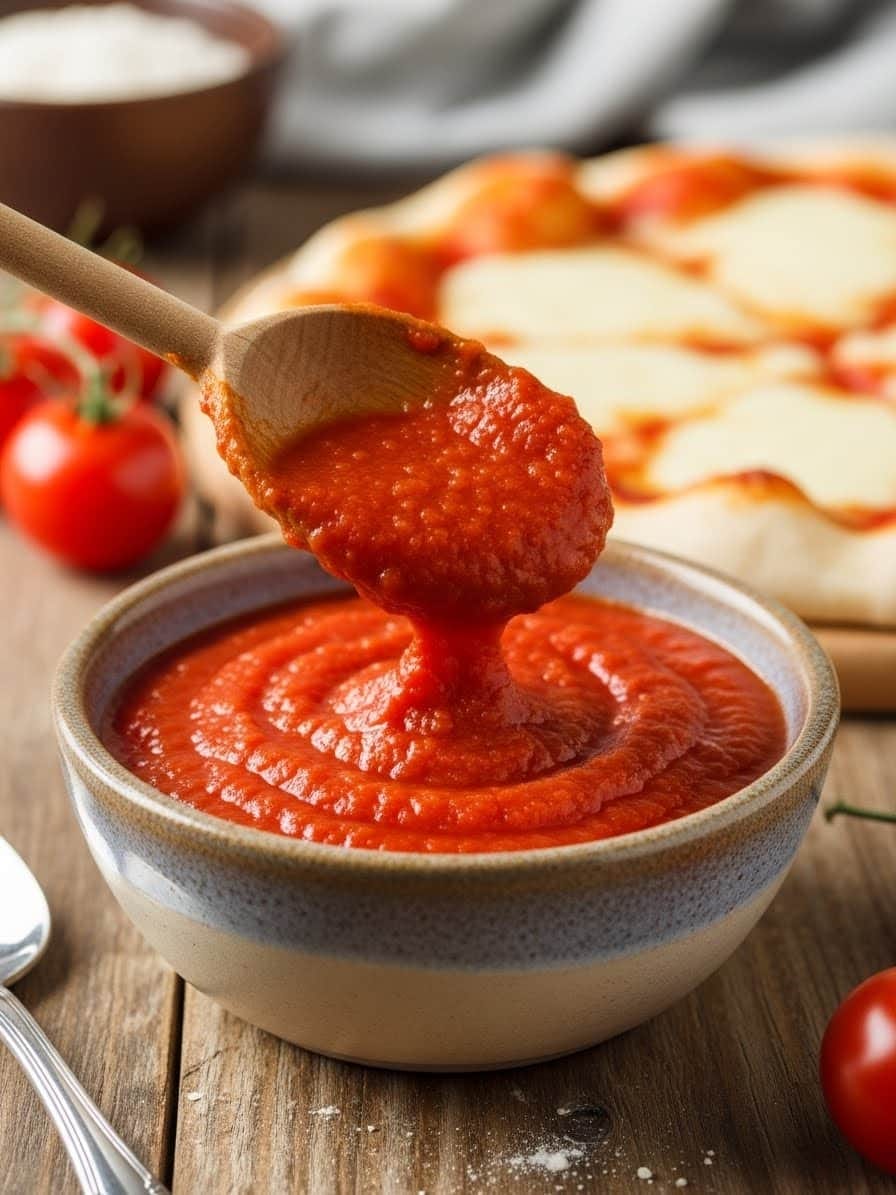
Homemade Pizza Sauce has been a staple in my kitchen for as long as I can remember. The first time I made it, I was testing recipes for a Friday night family pizza party. I wanted something simple yet full of flavor, without the sugar-heavy taste of store-bought sauce. When I stirred the crushed tomatoes with garlic, olive oil, oregano, and basil, the aroma filled my kitchen—rich, garlicky, and comforting. That moment sold me. Now, it’s my go-to base for pizza, calzones, and even as a dipping sauce for breadsticks. What I love about this Homemade Pizza Sauce is how adaptable it is: a touch of sugar if your tomatoes are acidic, or a sprinkle of chili flakes for heat. It’s fresh, quick, and better than anything from a jar, proving that great pizza starts with the sauce.
You will love this Homemade Pizza Sauce for its bold, fresh tomato flavor and easy, no-cook preparation. It comes together in just minutes using pantry staples you probably already have. Each spoonful delivers the perfect balance of tangy tomatoes, fragrant herbs, and rich olive oil. You can adjust it to your taste—add a little sugar for sweetness, chili flakes for heat, or extra basil for a burst of freshness. It freezes well, so you’ll always have a batch ready for your next pizza night.
This homemade pizza sauce is robust, tangy, and full of classic Italian flavor. For the perfect foundation, use it on our easy Homemade Pizza Dough , which bakes up with a soft center and crisp edges. Together, these two components make your pizza night unforgettable — ready for your favorite cheeses, toppings, and herbs.
Table of Contents
Key Ingredients
Every great Homemade Pizza Sauce starts with high-quality ingredients that bring out deep, classic Italian flavors. You don’t need anything fancy—just a few pantry staples that work together perfectly.
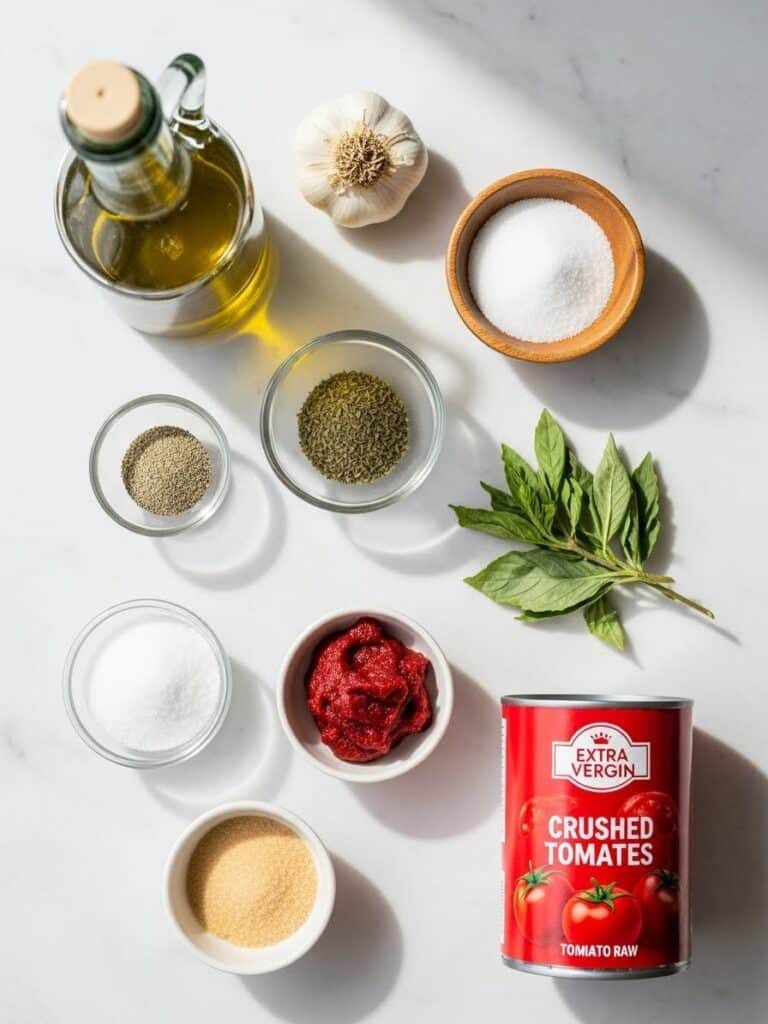
Crushed Tomatoes: These form the rich base of the sauce. Look for canned crushed tomatoes with no added sugar or preservatives; San Marzano or Italian-style varieties offer the best flavor. Their natural sweetness and mild acidity make the sauce vibrant without being overpowering.
Tomato Paste: This thickens the sauce and intensifies the tomato flavor. Just a spoonful adds a concentrated richness that makes your pizza taste like it came from a wood-fired oven.
Olive Oil: Extra-virgin olive oil brings smooth texture and depth, enhancing the herbs and garlic. It’s the secret to that velvety finish.
Garlic: Freshly grated garlic infuses the sauce with a savory, aromatic kick. Avoid pre-minced versions—they can taste flat.
Oregano and Basil: These classic Italian herbs give the sauce its signature pizzeria flavor. Dried versions work great here, blending beautifully with the tomatoes.
Salt, Pepper, and a Touch of Sugar: These seasonings balance acidity and highlight every ingredient. Adjust to taste—your perfect Homemade Pizza Sauce should be bold yet balanced.
Do you need to cook homemade pizza sauce before using it?
No, you don’t! This Homemade Pizza Sauce is a no-cook recipe designed to keep the tomatoes’ fresh, bright flavor intact. The acidity from the tomatoes blends naturally with the olive oil and herbs over time, creating a rich, full-bodied taste without simmering. In fact, letting the sauce sit for about 30 minutes allows the garlic and oregano to mingle perfectly. If you prefer a warmer sauce, you can heat it briefly, but it’s not necessary—your pizza will bake the sauce beautifully right in the oven.
Pro Tips for Success
- Use quality tomatoes. The flavor of your Homemade Pizza Sauce depends on the tomatoes. San Marzano or Italian-style canned tomatoes make a noticeable difference.
- Grate your garlic. Using a microplane gives an even flavor throughout the sauce and prevents harsh garlic chunks.
- Don’t overdo the herbs. A light hand keeps the sauce balanced—too much oregano can overpower the tomato’s natural sweetness.
- Let it rest. After mixing, allow the sauce to sit for 20–30 minutes. This resting time deepens the flavor as the herbs and oil infuse the tomatoes.
- Adjust the texture. If it’s too thick, thin with olive oil or water. If too thin, stir in more tomato paste.
- Taste before using. Always check the balance of salt, sugar, and herbs before spreading it on your pizza.
- Store smart. Freeze leftover sauce in portions for quick, fresh pizza nights anytime.
How to Make Homemade Pizza Sauce
Making Homemade Pizza Sauce from scratch is quick, easy, and far more flavorful than anything you’ll find in a jar. Follow these simple numbered steps to get it just right every time.
1. Gather your ingredients. You’ll need crushed tomatoes, tomato paste, olive oil, grated garlic, salt, dried oregano, dried basil, ground black pepper, and optionally, a touch of sugar.
2. Mix the base. In a medium mixing bowl, add the crushed tomatoes, tomato paste, olive oil, and garlic. Use a wooden spoon to stir until the tomato paste blends completely into the crushed tomatoes.
3. Season it up. Sprinkle in the salt, oregano, basil, and black pepper. Stir again to evenly distribute the herbs and seasoning throughout the sauce.
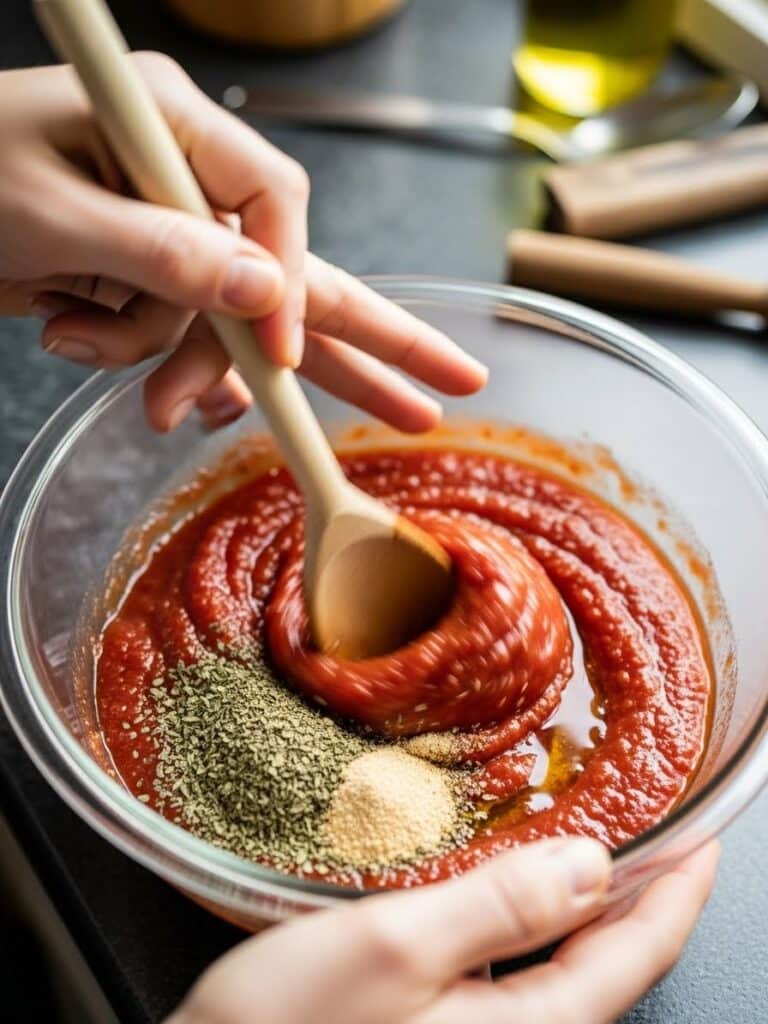
4. Adjust the flavor. Taste the sauce. If it tastes slightly bitter or acidic, stir in ¼ to ½ teaspoon of sugar. Add a little extra salt or pepper if needed until it tastes balanced and bright.
5. Customize your way. Want a spicier version? Add red pepper flakes. Prefer a deeper flavor? A pinch of fennel seed works wonders.
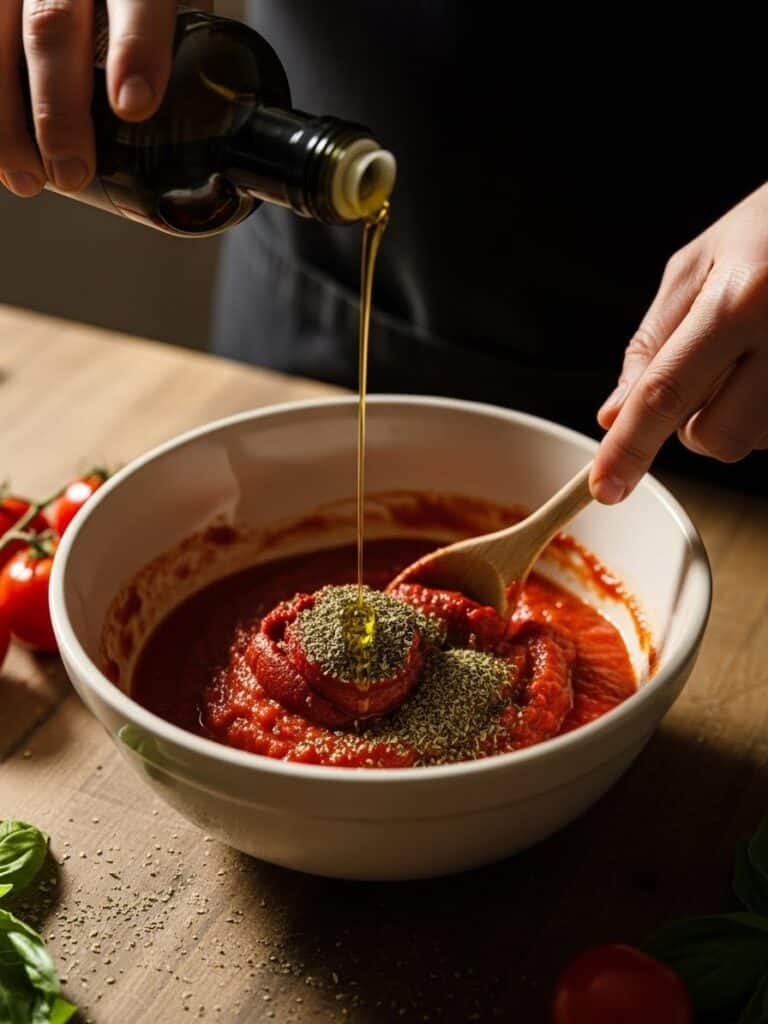
6. Let it rest. For the best flavor, allow the sauce to sit at room temperature for 20–30 minutes before using. This helps the herbs bloom and the flavors meld beautifully.
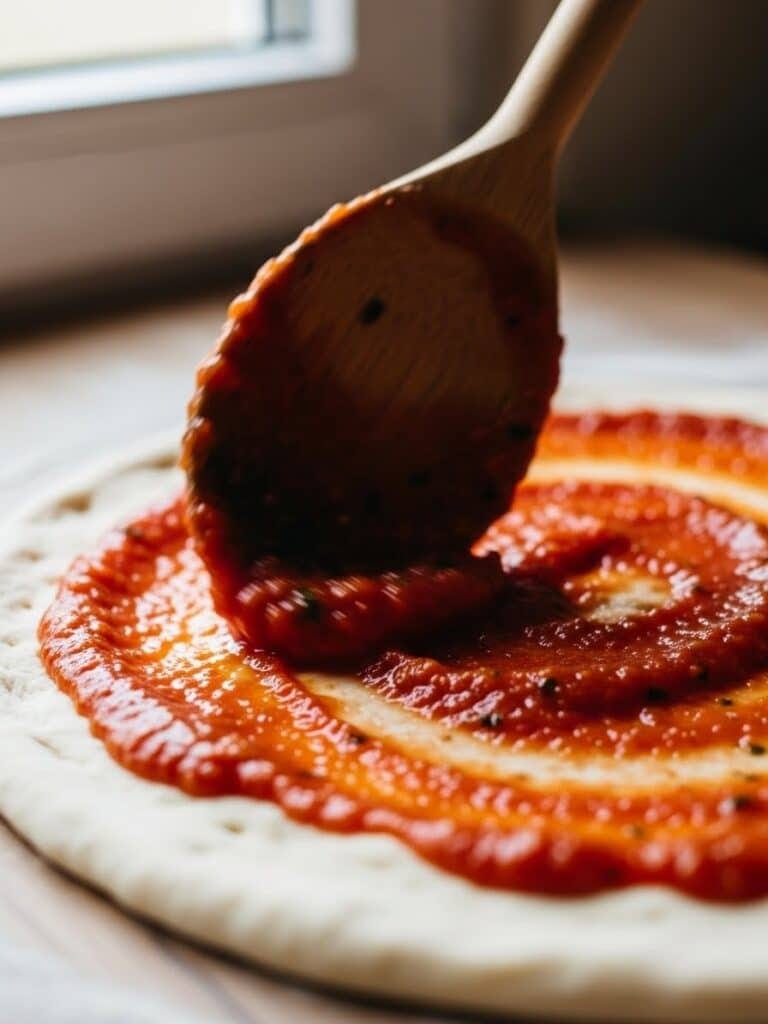
7. Spread and bake. Spoon the sauce over your prepared pizza dough, top with cheese and toppings, and bake. Each bite will deliver that fresh, authentic, pizzeria-style taste.
Serving Suggestions
This Homemade Pizza Sauce is incredibly versatile and pairs perfectly with any type of pizza you love. Spread it over classic pizza dough, naan bread, or even English muffins for a quick personal pizza. It’s also delicious as a dipping sauce for Garlic Parmesan Breadsticks or mozzarella sticks. For a fun twist, use it as a base for homemade calzones or pizza pinwheels. On family nights, I like serving it alongside Easy Homemade Pizza Dough so everyone can create their favorite flavor combinations right at the table.
Storage & Make-Ahead Tips
Your Homemade Pizza Sauce stores beautifully, making it perfect for meal prep and spontaneous pizza nights. Keep it in an airtight jar or container in the refrigerator for up to one week. The flavors will continue to develop, making the sauce even tastier after a day or two. For longer storage, pour the sauce into freezer-safe bags or small containers, leaving a little room for expansion, and freeze for up to three months. Thaw it overnight in the fridge or under warm water before using. Stir well before spreading—it’ll taste just as fresh as the day you made it.
Sienna’s Touch
Making this Homemade Pizza Sauce always reminds me of cozy Friday nights in our Los Angeles kitchen, where the smell of garlic and tomatoes fills the air while my daughters sprinkle cheese on their pizzas. It’s a small ritual that turns dinner into connection. I hope this sauce brings that same warmth and joy to your table—one pizza night at a time.
FAQs About Homemade Pizza Sauce
1. What’s the difference between pizza sauce and pasta sauce?
Pizza sauce is usually uncooked and thicker, meant to cook on the pizza in the oven. Pasta sauce is simmered longer, giving it a richer, smoother texture.
2. How can I make my pizza sauce thicker or less watery?
If your sauce feels thin, add a tablespoon of tomato paste or simmer briefly to reduce liquid. For a no-cook fix, mix in a bit more tomato paste.
3. How long does homemade pizza sauce last in the fridge or freezer?
It lasts up to one week refrigerated in an airtight jar and up to three months frozen. Thaw overnight before using.
4. Can I use fresh tomatoes instead of canned?
Yes! Blanch and peel fresh tomatoes, then crush or blend them before mixing with the remaining ingredients. Adjust salt and sugar to balance acidity.
Homemade Pizza Sauce

This Homemade Pizza Sauce is a quick, no-cook recipe packed with Italian flavor and fresh ingredients.
- Prep Time: undefined
- Cook Time: undefined
- Total Time: undefined
- Yield: undefined
- Category: undefined
- Method: undefined
- Cuisine: undefined
Ingredients
1 (15-ounce/425g) can crushed tomatoes
1 tablespoon tomato paste
2 tablespoons olive oil
1 clove garlic grated
¾ teaspoon salt
½ teaspoon dried oregano
½ teaspoon dried basil
¼ teaspoon ground black pepper
¼ to ½ teaspoon sugar (optional)
Instructions
1. Combine all ingredients in a bowl.
2. Taste and adjust seasonings as desired.
3. Let the sauce rest before using.
Notes
Use microplane for garlic.
Adjust thickness with tomato paste or olive oil.
Add chili flakes for heat or fennel seed for depth.
Nutrition
- Serving Size: undefined
- Calories: undefined
- Sugar: undefined
- Sodium: undefined
- Fat: undefined
- Saturated Fat: undefined
- Unsaturated Fat: undefined
- Trans Fat: undefined
- Carbohydrates: undefined
- Fiber: undefined
- Protein: undefined
- Cholesterol: undefined
Keywords: undefined