
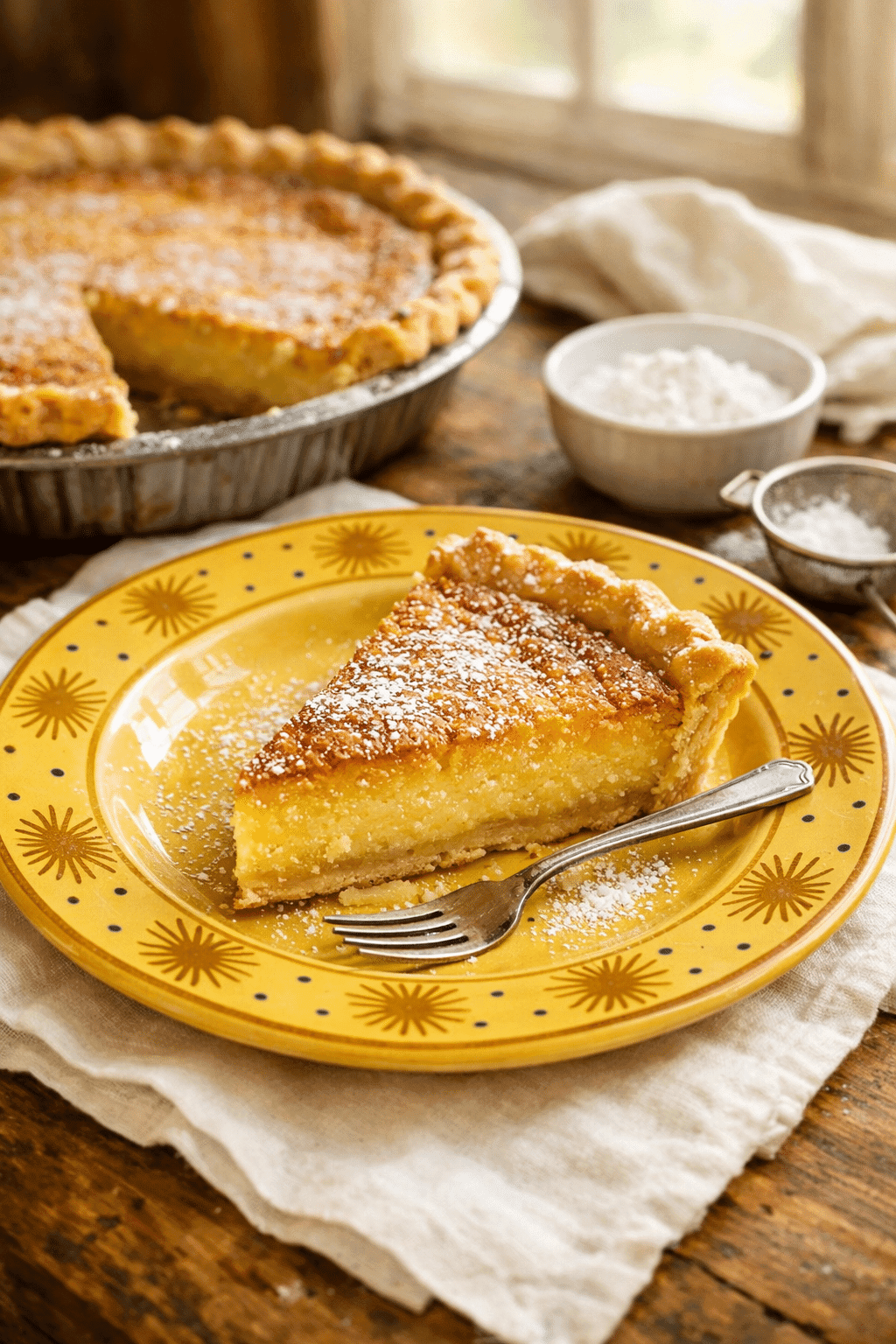
The first time I made this chess pie recipe, I understood why it’s a true Southern staple. It’s wonderfully simple — just a handful of pantry ingredients — yet it bakes into something truly special.
The filling sets into a silky custard with a crackly golden top that shimmers under the light. The buttery crust adds a delicate crunch to every bite, creating that irresistible balance of texture and sweetness.
I usually bake this pie on Sunday afternoons when the house smells like vanilla and sugar, and my daughters sneak in for “taste tests.” It’s the kind of dessert that feels nostalgic and effortless — perfect for holidays, potlucks, or whenever you need a cozy, homemade sweet.
This chess pie recipe has been tested countless times in my Los Angeles kitchen, and it never disappoints.
You’ll love this Chess Pie recipe for its simple ingredients and buttery, custard-rich flavor that melts in every bite. Like our Peach Pie Recipe, it’s timeless, cozy, and crowd-pleasing — perfect for gatherings, holidays, or an everyday treat that fills your kitchen with warmth and Southern charm.
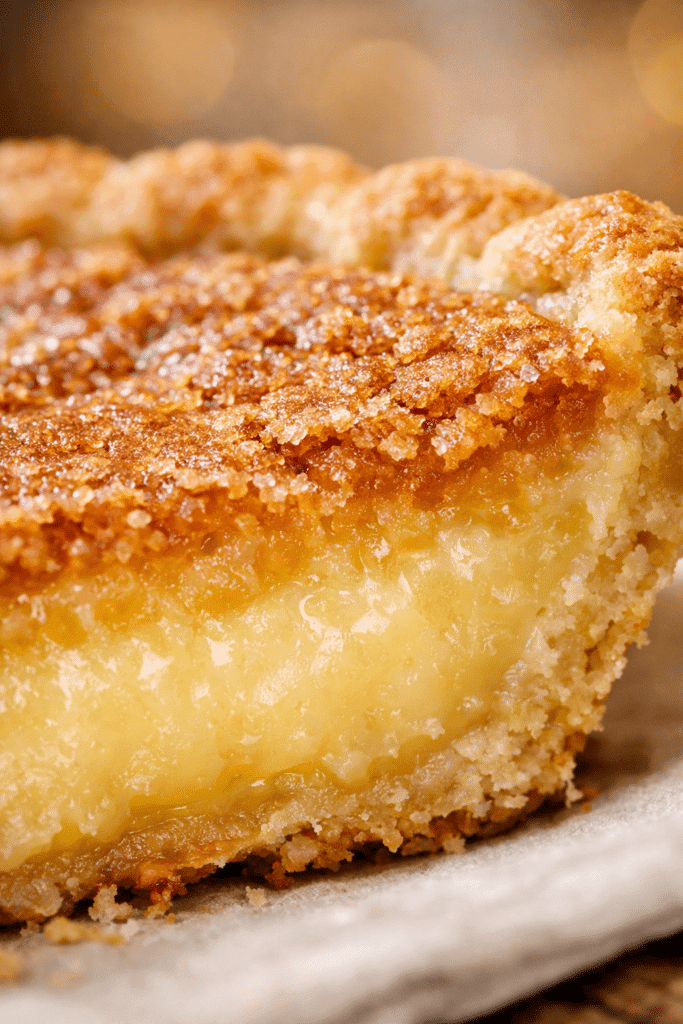
Table of Contents
Key Ingredients
Every slice of this chess pie recipe shines because of its simplicity. Each ingredient has a purpose — together, they create a buttery, silky pie with a classic Southern texture that’s impossible to resist. Here’s how every component makes a difference:
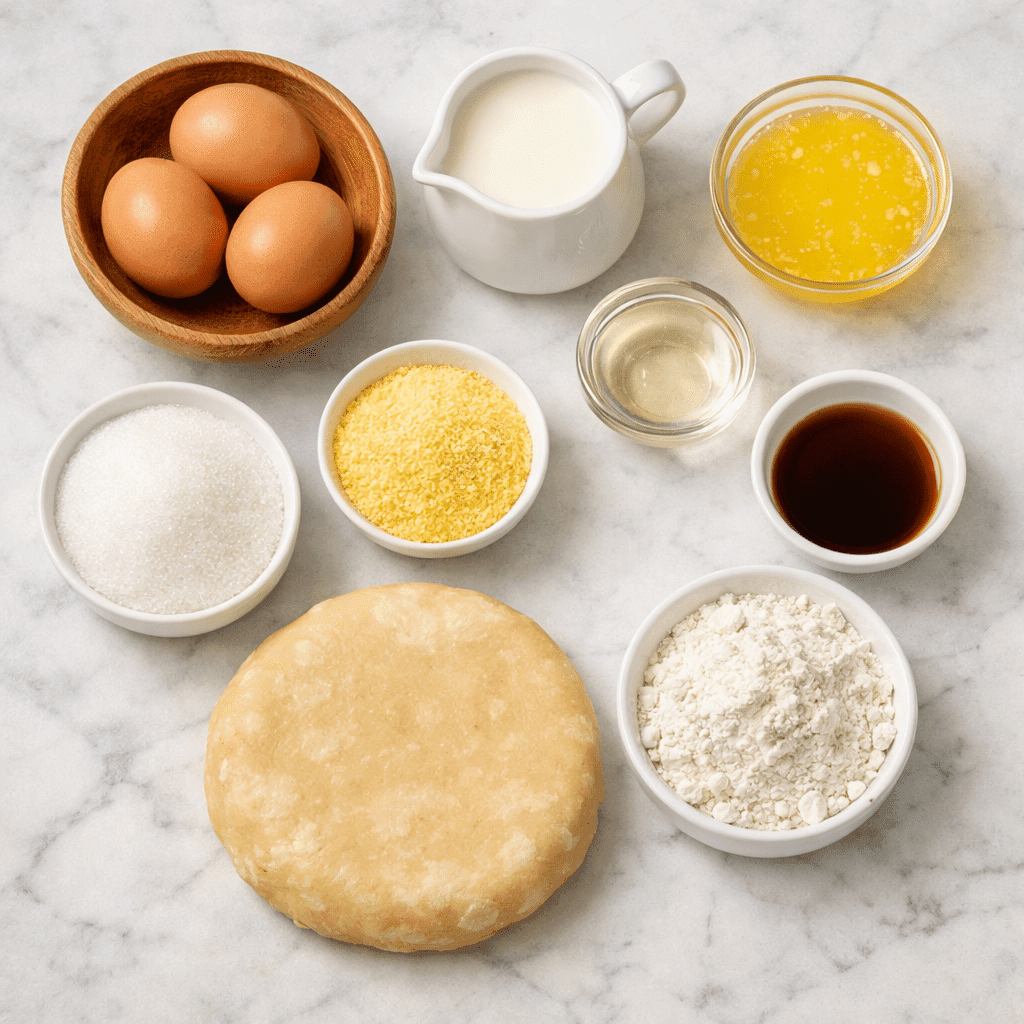
Eggs: The base of the filling. They give structure, richness, and that smooth, custardy consistency that defines traditional chess pie.
Granulated Sugar: Provides sweetness and the pie’s signature crackly, caramelized top. Don’t cut it down too much — it’s key for balance.
Butter: Melted butter adds depth and a rich, toffee-like flavor. Always use unsalted butter to control the salt level perfectly.
Cornmeal: The secret to chess pie’s subtle texture. It thickens the custard slightly and adds a delicate bite.
Flour: A small amount of flour helps stabilize the filling, ensuring it sets cleanly once cooled.
Vinegar: Balances the sweetness and keeps the custard from being overly rich. It’s the hidden touch that brightens the flavor beautifully.
Vanilla Extract: Adds warm, aromatic depth that enhances every other ingredient.
Whole Milk: Keeps the filling creamy without being heavy, giving each bite that smooth, melt-in-your-mouth finish.
This recipe uses the same comforting, homemade balance of sweetness and texture that fans love in our Cranberry Pie Recipe, but with that distinctly Southern, buttery richness.
Why does my chess pie crack on top or sink after baking?
Cracking or sinking usually happens when the pie is either overbaked or cooled too quickly. Chess pie has a custard-style filling that continues to set as it cools, so removing it at the right time makes all the difference. Bake until the edges are golden and the center has a gentle wobble — not liquid. Then let it cool slowly on a wire rack for at least two hours before slicing. This helps the custard firm up and prevents surface cracks. If you love fruit-filled pies with similar silky textures, try our Blueberry Pie Recipe for another crowd-favorite dessert.
Pro Tips for Success
- Blind bake your crust: Start with a crisp, golden foundation by blind-baking the crust before adding the filling. It prevents sogginess and gives that perfect flaky base. (If you need a dependable dough, use our Pie Crust Recipe—it’s foolproof.)
- Use room temperature ingredients: Cold eggs or milk can cause uneven baking and curdled custard. Let everything sit out for 20–30 minutes.
- Don’t overbake: Pull the pie when the center has a slight jiggle. It’ll firm up as it cools for that smooth, creamy texture.
- Cool completely: Resist cutting too soon. Cooling allows the filling to set cleanly for perfect slices.
- Add a dash of salt: A pinch of salt enhances the sweetness and brings out the buttery notes beautifully.
- Avoid overmixing: Overmixing can add air to the filling, which causes cracks as the pie bakes.
- Dust before serving: A light sprinkle of powdered sugar or whipped cream topping adds a lovely finish and photo-ready look.
How to Make Chess Pie
Making this chess pie recipe is as easy as it is rewarding. Follow these steps carefully, and you’ll end up with a custard-filled pie that’s smooth, golden, and irresistibly rich — just like the classic Southern pies you’d find at a Sunday family gathering.
1. Prepare the crust:
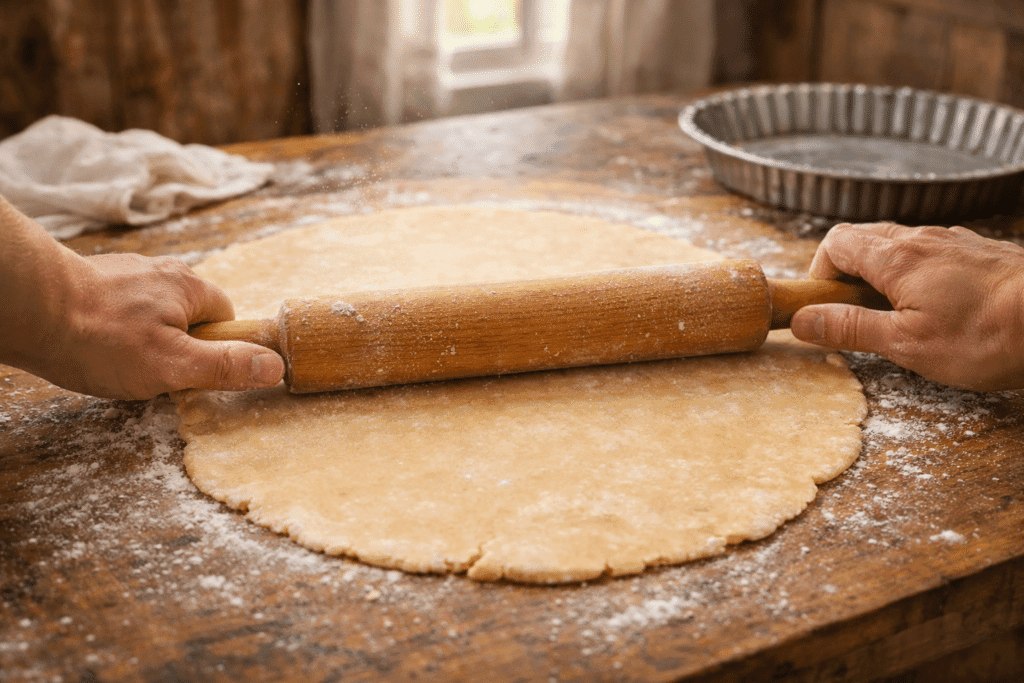
On a lightly floured surface, roll your pie dough into a 13-inch circle. Gently transfer it to a 9-inch pie dish, tucking the edges under and crimping as you like. For the best flaky result, check out my Pie Crust Recipe if you prefer to make it from scratch. Freeze the shaped crust for at least 30 minutes — this helps prevent shrinking during baking.
2. Blind-bake the crust:
While the crust chills, preheat your oven to 425°F. Line the frozen crust with parchment paper and fill it with pie weights or dried beans. Bake for 15 minutes, until the edges begin to turn golden. Carefully remove the parchment and weights, then let the crust cool completely on a wire rack.
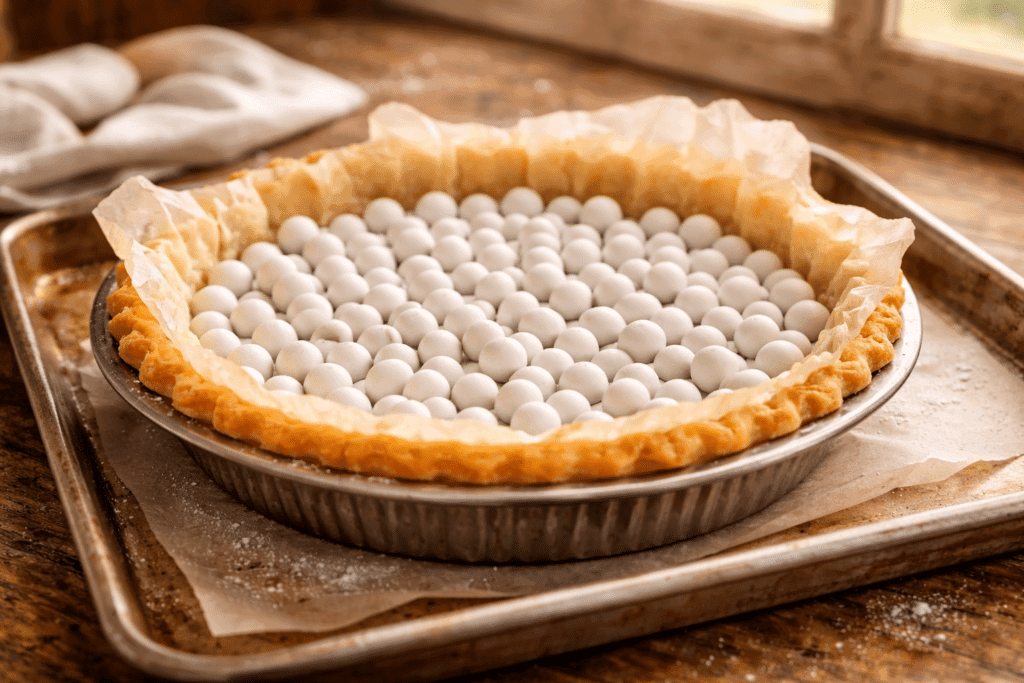
3. Lower the oven temperature:
Once your crust cools, reduce the oven to 350°F — this lower heat ensures your custard filling bakes slowly and evenly.
4. Make the filling:
In a large mixing bowl, whisk together 4 large eggs until smooth. Add 1½ cups sugar, ½ cup melted butter, ¼ cup whole milk, 3 tablespoons cornmeal, 1 tablespoon flour, 1 tablespoon vinegar, and 2 teaspoons vanilla extract. Whisk until fully combined — you should have a silky, glossy filling.
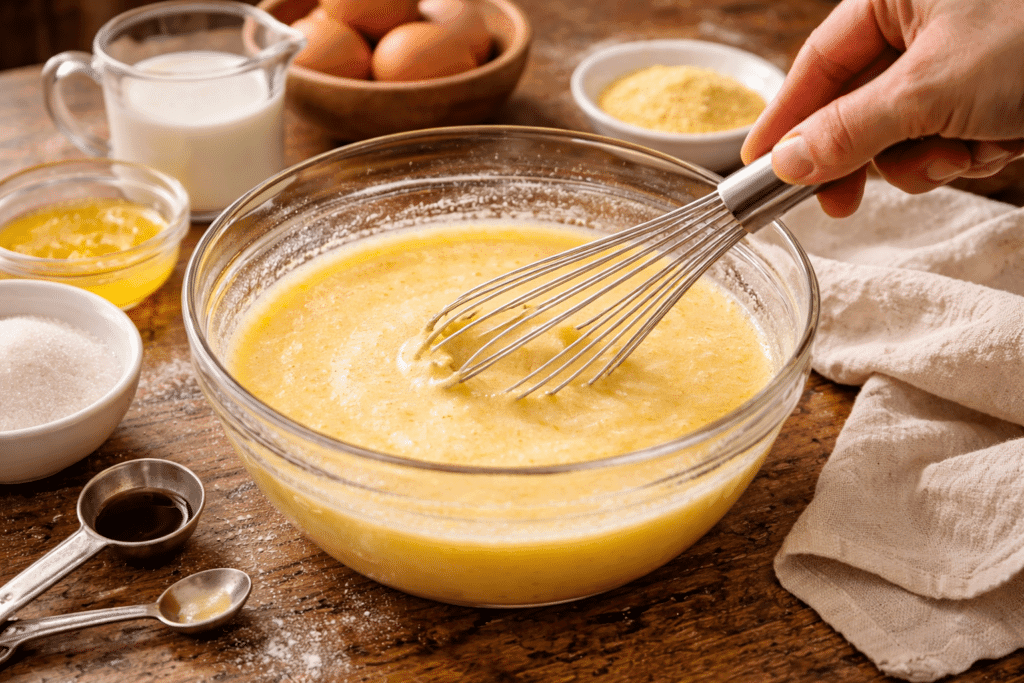
5. Fill and bake:
Pour the filling into your pre-baked crust. Place the pie dish on a rimmed baking sheet to catch any spills. Bake for 45 minutes, rotating halfway through. The pie is done when the edges are set, the top turns golden brown, and the center has a soft jiggle.
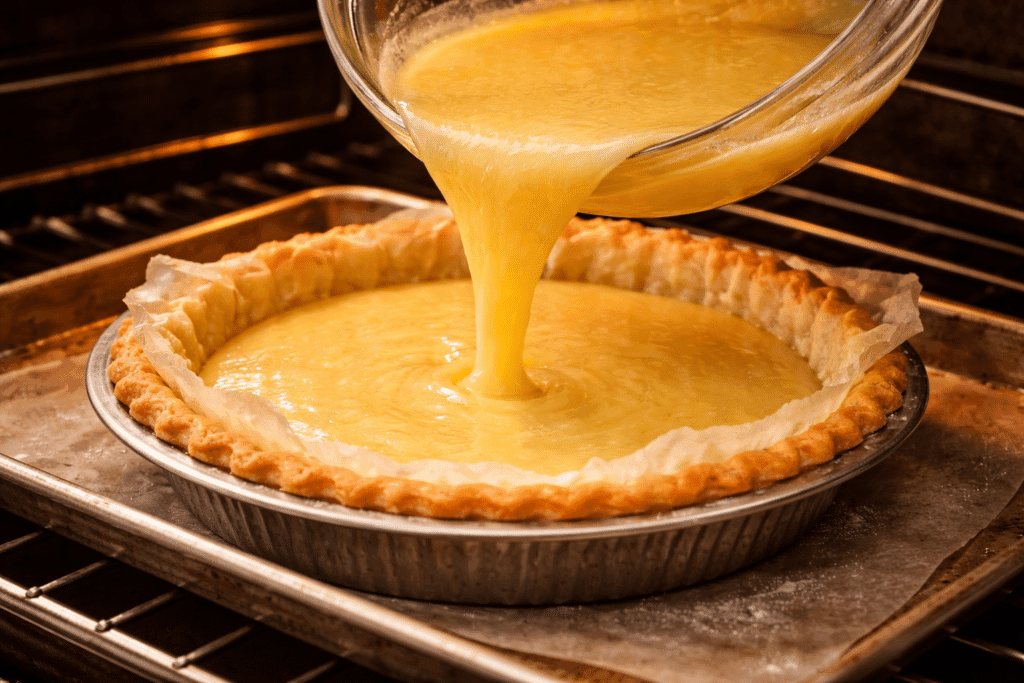
6. Cool and serve:
Allow the pie to cool completely before slicing. This resting time helps the custard firm up. Dust lightly with powdered sugar for a touch of elegance.
This method ensures a perfectly set custard with a crisp, buttery crust — a hallmark of every Southern-style pie. If you enjoy comforting, homemade flavors, you’ll also love our Chicken Pot Pie Recipe for savory inspiration or the classic Apple Pie Recipe for another nostalgic dessert favorite.
Serving Suggestions
There’s something undeniably special about slicing into a warm chess pie and hearing that gentle crackle of the golden top. This pie serves beautifully at room temperature or chilled, depending on your mood and the occasion. For a touch of Southern indulgence, I love topping each slice with a dollop of lightly whipped cream or a scoop of vanilla ice cream — the creamy coolness contrasts perfectly with the custardy filling.
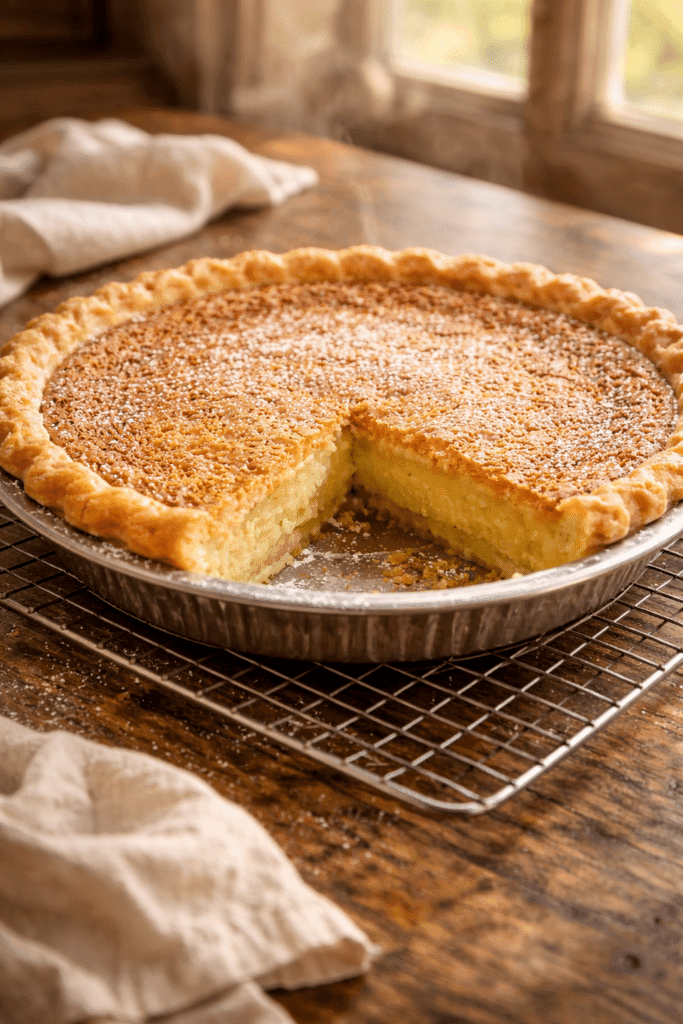
Pair it with a cup of freshly brewed coffee or sweet iced tea to keep that down-home charm alive. When serving for holidays, garnish with a sprinkle of powdered sugar or a few berries for a bright, elegant look. If you’re planning a dessert table, this pie pairs wonderfully alongside fruit-based favorites like our Apple Pie Recipe or the tart-sweet Cranberry Pie Recipe for a well-balanced spread.
Chess pie’s richness also makes it the perfect “make-ahead” dessert — the flavors deepen overnight, giving every bite more depth and buttery warmth. Whether you’re hosting friends, celebrating family, or simply craving something sweet on a cozy evening, this pie makes any occasion feel like home.
Storage & Make-Ahead Tips
The beauty of this Chess Pie recipe is that it stores beautifully without losing flavor or texture. Once baked, let the pie cool completely at room temperature — this step allows the custard to set perfectly. After cooling, cover it loosely with plastic wrap or foil and refrigerate for up to 4 days. The flavor actually deepens over time, so it tastes even better the next day.
For longer storage, you can freeze the pie. Wrap it tightly in two layers of plastic wrap and then in foil to prevent freezer burn. When you’re ready to enjoy, thaw it overnight in the refrigerator, then let it come to room temperature before serving.
If you prefer to prep ahead, you can make and blind-bake your crust a day early. Store it covered at room temperature until you’re ready to fill. This trick works great if you’re baking multiple pies for a holiday spread — it saves oven time and stress. For more time-saving tips and crust ideas, check out my Pie Crust Recipe that freezes perfectly and stays flaky.
Avoid refrigerating a warm pie, as condensation can make the crust soggy. Instead, let it rest fully before chilling. Whether served fresh or made in advance, your chess pie will stay creamy, slice cleanly, and deliver that signature sweet-buttery perfection every single time.
Sienna’s Touch
Every time I bake this chess pie recipe, it reminds me why I love simple, timeless desserts. It’s more than sugar and butter — it’s comfort in a crust, a little piece of the South baked right into my Los Angeles kitchen. My daughters always sneak a slice before dinner, and my husband swears it tastes even better the next day (he’s not wrong).
If you make this pie, share it with someone you love — because that’s what truly makes it special. Don’t forget to leave a comment and tell me how it turned out; I’d love to hear about your family’s favorite way to enjoy it. Here’s to pies that bring us together and kitchens filled with laughter, sweetness, and good company.
Frequently Asked Questions
1. Why is it called chess pie?
The name “chess pie” likely comes from “cheese pie,” a British term for custard-like desserts that set firm like soft cheese. Over time, “cheese” morphed into “chess.”
2. How do I know when chess pie is done baking?
The pie is done when the edges are golden, the top is slightly puffed, and the center jiggles gently when shaken. It will firm up perfectly as it cools.
3. Why does my chess pie filling turn runny?
A runny filling usually means it was underbaked or sliced before cooling. Always bake until set, then let the pie rest for at least 2 hours before cutting.
4. Should chess pie be refrigerated?
Yes. Because it contains eggs and dairy, store it covered in the refrigerator for up to four days. Bring to room temperature before serving for the best flavor.
Chess Pie Recipe

This classic Southern Chess Pie recipe features a buttery homemade crust and a silky, sweet custard filling topped with a golden crackly finish. Easy, nostalgic, and perfect for holidays or everyday baking.
- Prep Time: PT30M
- Cook Time: PT45M
- Total Time: PT1H15M
- Yield: 1 9-inch pie 1x
- Category: Dessert
- Method: Baking
- Cuisine: Southern
- Diet: Vegetarian
Ingredients
1 pie dough
4 large eggs
1½ cups granulated sugar
½ cup unsalted butter, melted
¼ cup whole milk
3 tablespoons yellow cornmeal
1 tablespoon all-purpose flour
1 tablespoon white or cider vinegar
2 teaspoons vanilla extract
Instructions
Step 1: Roll out the pie dough into a 13-inch circle and place it in a 9-inch pie dish. Crimp the edges as desired.
Step 2: Freeze for 30 minutes to help prevent shrinking.
Step 3: Preheat oven to 425°F. Line the crust with parchment paper and fill with pie weights.
Step 4: Bake for 15 minutes until edges are golden. Remove weights and parchment, then let cool.
Step 5: Reduce oven temperature to 350°F.
Step 6: Whisk eggs, sugar, butter, milk, cornmeal, flour, vinegar, and vanilla until combined.
Step 7: Pour the filling into the pre-baked crust.
Step 8: Bake for 45 minutes, rotating halfway through, until golden brown and just set in the center.
Step 9: Cool completely on a wire rack before slicing. Dust with powdered sugar if desired.
Notes
Let the pie cool fully for clean slices.
Refrigerate leftovers for up to 4 days.
For best results, serve at room temperature or slightly chilled with whipped cream.
Nutrition
- Serving Size: 1 slice
- Calories: 420
- Sugar: 35g
- Sodium: 180mg
- Fat: 22g
- Saturated Fat: 12g
- Unsaturated Fat: 8g
- Trans Fat: 0g
- Carbohydrates: 48g
- Fiber: 1g
- Protein: 6g
- Cholesterol: 130mg
Keywords: chess pie, Southern dessert, custard pie, easy pie recipe