
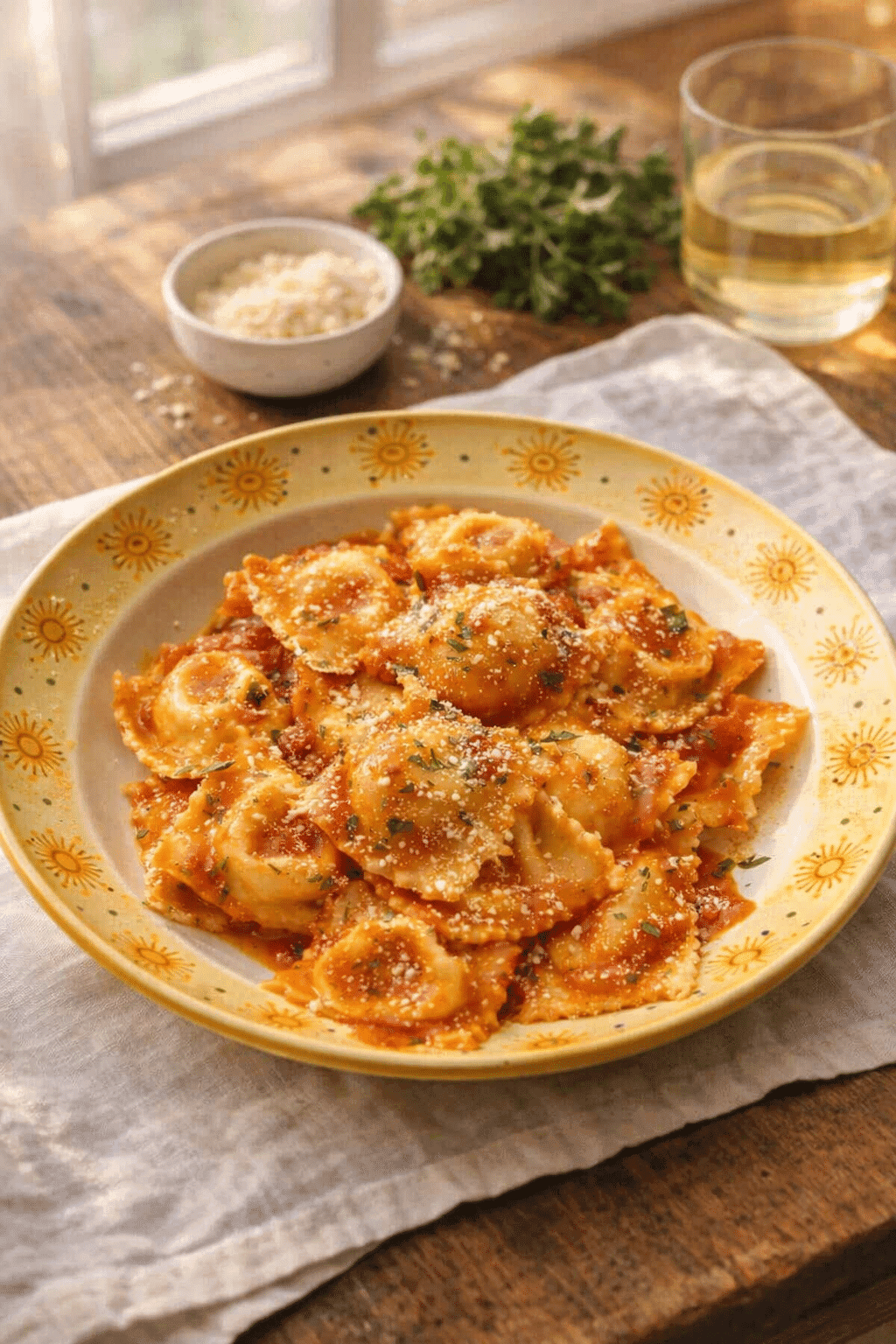
Cheese Ravioli is one of those dishes I come back to when I want something comforting but still hands-on and rewarding. The first time I made Cheese Ravioli at home, my girls stood on stools beside the counter, pressing dough and sneaking bits of cheese from the bowl. Moments like that are why this recipe stays on repeat in our kitchen.
The pasta cooks up tender, while the filling turns creamy and balanced. Every bite feels special without being complicated or heavy. I usually make this Cheese Ravioli on quiet weekends, especially when we want a dinner that slows everyone down and brings everyone together.
The dough feels sturdy at first, then softens as you knead, which makes the process satisfying and approachable. The filling stays rich without overpowering the pasta. Once you try fresh Cheese Ravioli, it’s hard to go back to store-bought versions.
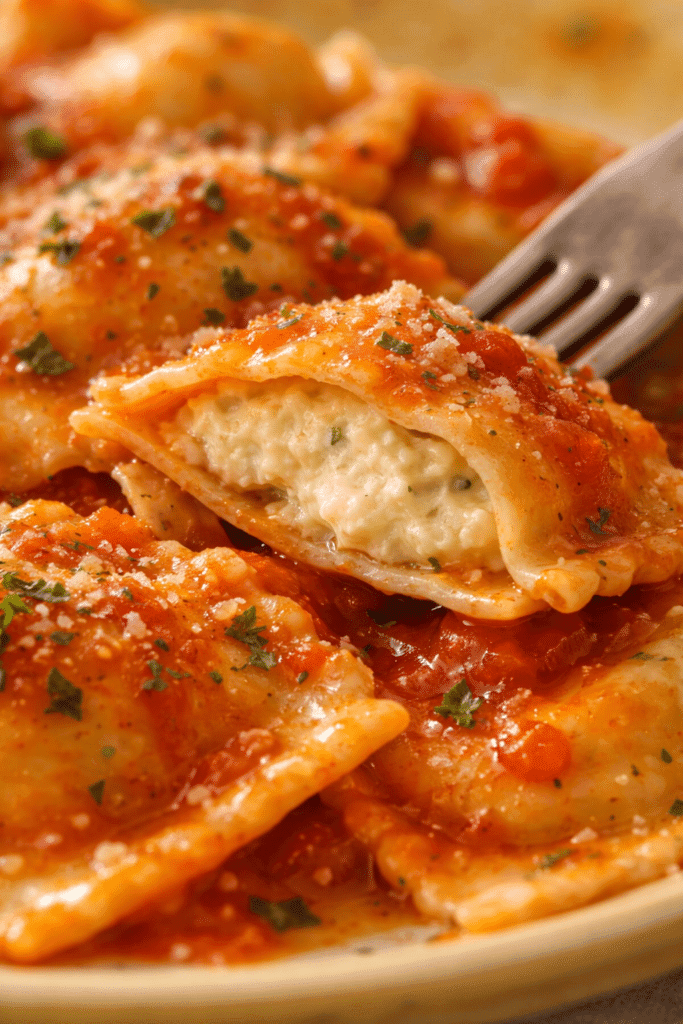
You will love how this Cheese Ravioli turns simple ingredients into a comforting, from-scratch meal you can trust. The dough rolls smoothly, seals easily, and cooks up tender every time. The cheese filling tastes rich yet balanced, never heavy.
Clear steps, forgiving timing, and make-ahead flexibility make this recipe perfect for weekends, family dinners, or relaxed entertaining, with results that feel homemade, cozy, and proudly worth sharing.
If you enjoy cozy homemade pasta nights, this Cheese Ravioli fits right in with comforting favorites like Chicken Alfredo, where simple ingredients turn into a satisfying family dinner.
Table of Contents
Key Ingredients
This Cheese Ravioli recipe uses classic pantry and dairy ingredients, and each one plays a specific role in creating pasta that tastes balanced, tender, and satisfying from the first bite to the last.
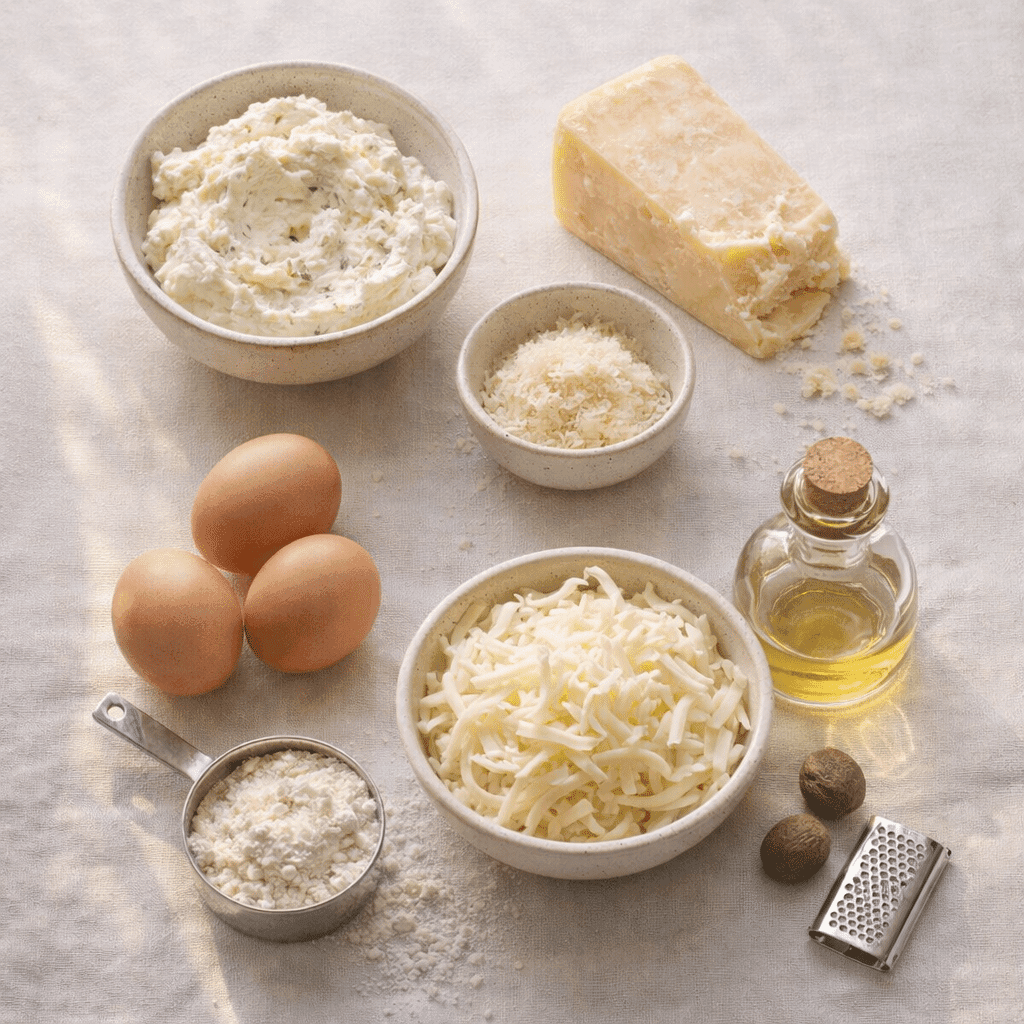
All-purpose flour builds the foundation of the dough. It provides enough strength to roll the pasta thin while still keeping it soft once cooked.
Eggs give the dough richness and structure. They help bind everything together and create a smooth texture that cooks evenly.
Olive oil adds flexibility to the dough, which makes rolling and shaping much easier, especially for home cooks.
Salt seasons the pasta itself, so every bite tastes flavorful even before adding sauce.
Semolina flour prevents sticking during rolling and shaping. It also adds a light texture to the outside of the ravioli.
Ricotta cheese forms the creamy base of the filling. It keeps the center soft and light rather than dense.
Parmesan cheese brings sharp, savory depth that balances the mild ricotta and boosts overall flavor.
Fresh mozzarella melts gently inside the ravioli, giving the filling a soft, comforting bite.
Nutmeg adds warmth and subtle aroma that enhances the cheese without standing out.
Black pepper finishes the filling with gentle heat that keeps the flavors lively and well-rounded.
If you love hands-on comfort food that feels special without being complicated, this recipe delivers the same rewarding experience as Homemade Beef Lasagna,
Why does homemade Cheese Ravioli burst while cooking?
Homemade Cheese Ravioli usually bursts when air stays trapped inside or when the edges don’t seal well. Press gently but firmly around each mound of filling to remove air before cutting. Keep the filling modest, since cheese expands as it heats. When cooking, use a gentle simmer instead of a rapid boil. Calm water protects the pasta, helps the seams stay closed, and keeps the filling inside where it belongs.
Pro Tips for Success
- Let the pasta dough rest fully before rolling. This relaxes the gluten, which makes the dough easier to stretch thin without snapping back.
- Dust lightly with semolina flour, not all-purpose flour, when rolling and shaping. Semolina prevents sticking without drying the pasta.
- Keep unused dough and finished pasta sheets covered. Fresh pasta dries quickly and becomes difficult to seal if exposed too long.
- Pipe the filling instead of spooning it. This gives you even portions and helps prevent overfilling.
- Press firmly around each mound of filling to push out trapped air. Less air means fewer broken ravioli during cooking.
- Simmer the ravioli gently rather than boiling hard. Calm water protects the seams and keeps the Cheese Ravioli intact.
- Transfer cooked ravioli directly into warm sauce. This coats them evenly and keeps the pasta tender and flavorful.
If you’ve ever worked with dough before, making Cheese Ravioli will feel familiar, particularly if you’ve tried Homemade Pizza Dough and learned how rest time affects texture.
How to Make Cheese Ravioli
Making Cheese Ravioli from scratch feels manageable when you follow the steps in order. This Cheese Ravioli recipe breaks the process down so each stage builds confidence, from mixing the dough to sealing the final Cheese Ravioli pieces. Once you start, making homemade Cheese Ravioli becomes rhythmic and satisfying.
Step 1: Build the pasta dough
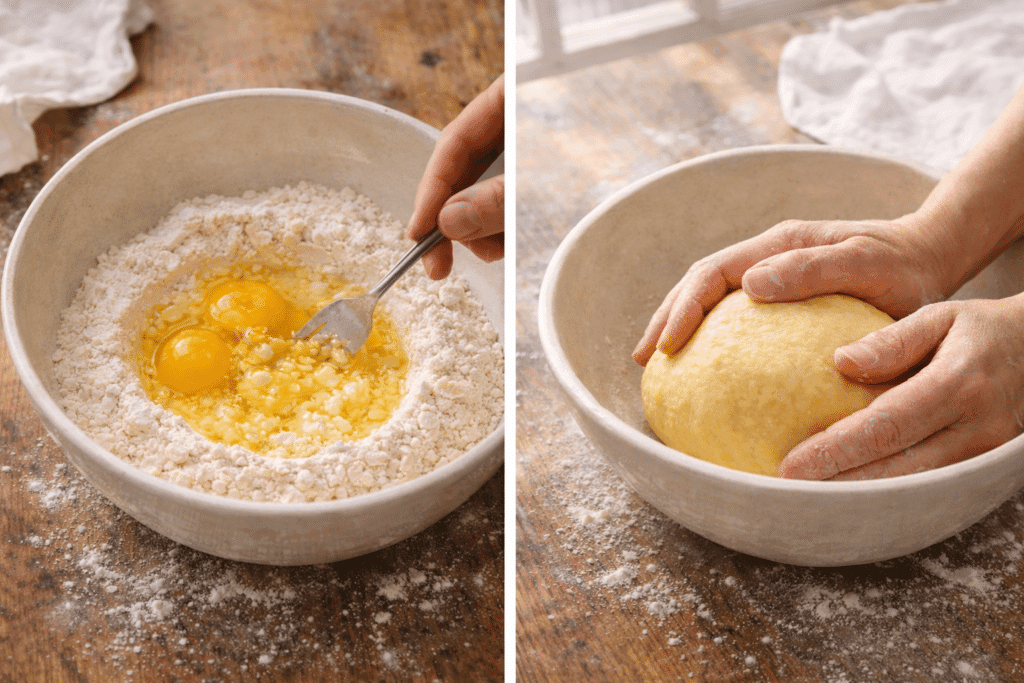
Pour the flour onto a clean work surface and shape it into a wide mound. Create a deep well in the center and add the eggs, olive oil, and salt. Use a fork to gently beat the eggs while slowly pulling flour from the inner edges. Work carefully so the liquid stays contained until the mixture thickens. Once it turns pale and sticky, bring the remaining flour into the center until a rough dough forms.
Step 2: Knead until smooth
Use your hands or a bench scraper to gather the dough and begin kneading. Press, fold, and turn the dough repeatedly. At first, it will feel stiff, but it softens as you work. Continue kneading until the surface becomes smooth and elastic and springs back when pressed. This step builds strength so the pasta won’t tear later.
Step 3: Rest the dough
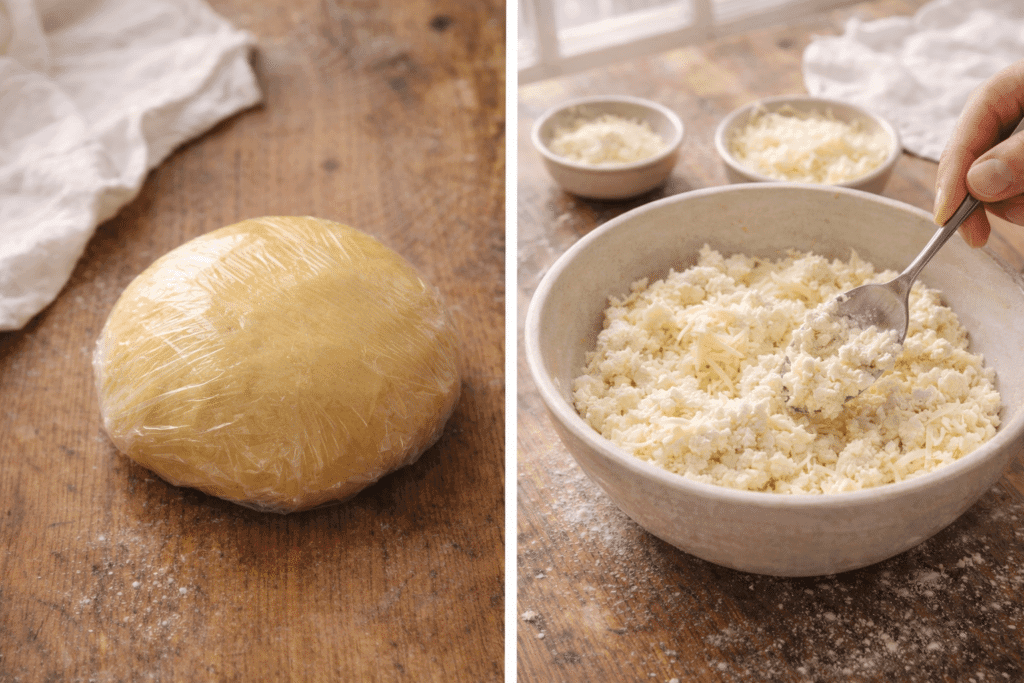
Wrap the dough tightly in plastic wrap and let it rest at room temperature. Resting relaxes the gluten, which makes rolling easier and prevents shrinking. Do not skip this step, as rested dough rolls thinner and seals more cleanly.
Step 4: Prepare the cheese filling
Combine ricotta, parmesan, mozzarella, nutmeg, salt, and black pepper in a bowl. Stir until smooth and evenly mixed. Transfer the mixture into a piping bag and refrigerate. Cold filling stays firm, pipes neatly, and helps the ravioli seal properly.
Step 5: Roll the pasta sheets
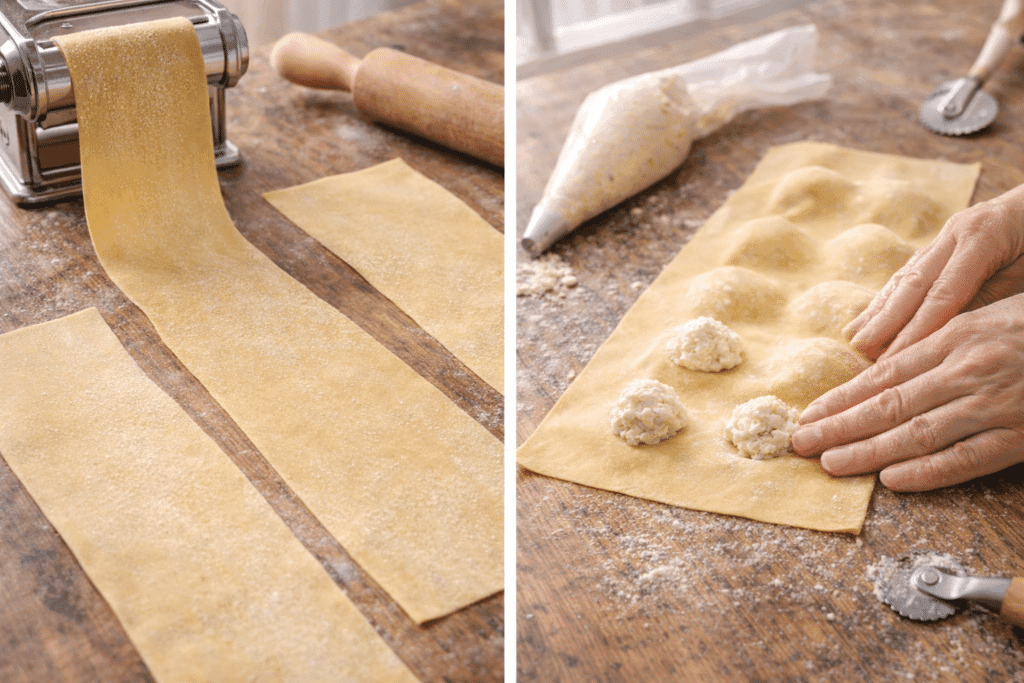
Divide the rested dough into four equal pieces and keep the unused portions covered. Flatten one piece and dust lightly with semolina. Run it through the pasta roller on the widest setting, folding and rolling a few times to smooth it out. Gradually move through thinner settings, dusting lightly as needed, until the sheet becomes thin and even.
Step 6: Fill and seal the ravioli
Lay one pasta sheet flat on your work surface. Pipe small, evenly spaced mounds of filling, leaving space around each portion. Lightly brush another pasta sheet with water and place it on top. Press gently around each mound, pushing out air and sealing the layers together firmly so the seams hold.
Step 7: Cut and rest before cooking
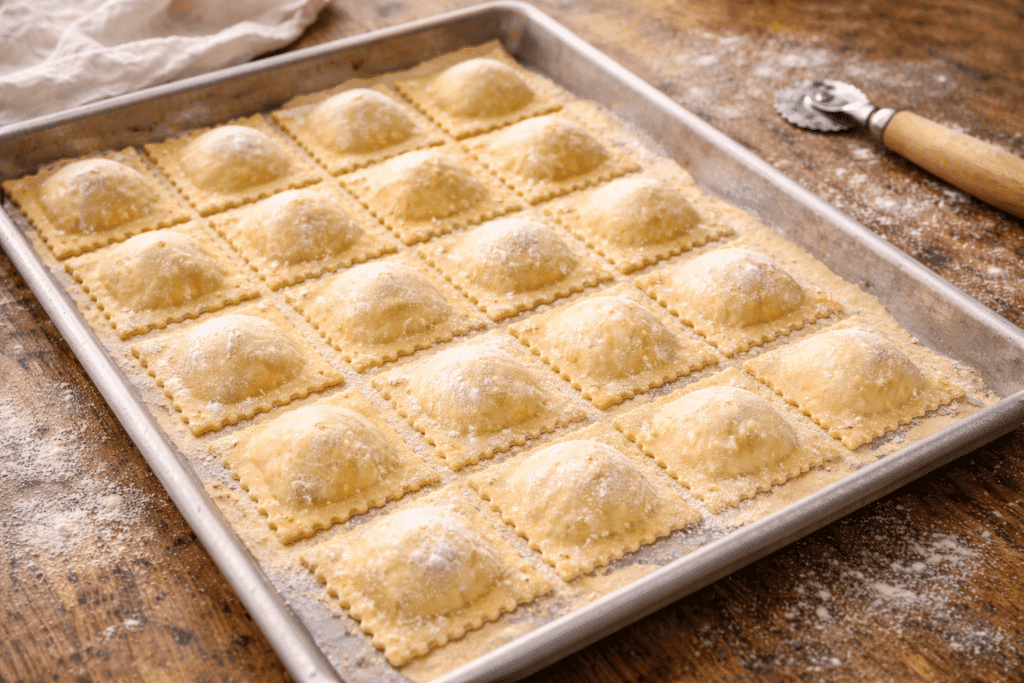
Trim the edges and cut between the filling to create individual pieces. Place them on a semolina-dusted baking sheet and let them rest uncovered for a short time. This brief drying period helps strengthen the seams so they hold together when cooked.
If you enjoy light pasta meals with clean flavors, the same rolling and cooking habits used for Shrimp Linguine apply beautifully to Cheese Ravioli.
Serving Suggestions
Cheese Ravioli tastes best when served simply, letting the pasta and filling shine. I often toss freshly cooked Cheese Ravioli with warm marinara or a light butter sauce finished with grated parmesan.
A sage brown butter also works beautifully and adds warmth without overpowering the cheese. For a fresher option, serve the ravioli with a spoonful of ricotta and a drizzle of olive oil.
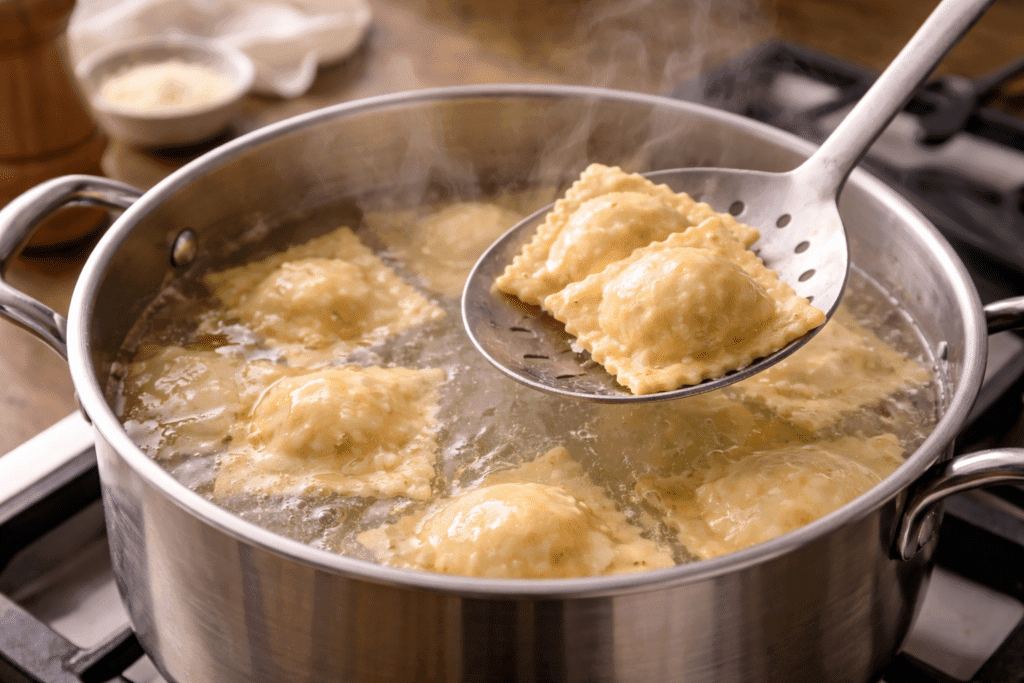
Cheese Ravioli fits right into family dinners, date nights at home, or relaxed weekend meals with friends. Pair it with a crisp green salad, roasted vegetables, or garlic bread to round out the plate.
When serving guests, finish with extra parmesan and freshly cracked black pepper at the table. Simple sides and gentle sauces keep the ravioli front and center, making each bite feel comforting and complete.
If you like simple sauces that let pasta shine, a gentle marinara such as Homemade Pizza Sauce
Storage & Make-Ahead Tips
Cheese Ravioli stores well when handled carefully, which makes it a great option for planning ahead. If you plan to cook it the same day, arrange the uncooked ravioli in a single layer on a semolina-dusted baking sheet.
Cover loosely and refrigerate for up to 24 hours. For longer storage, freeze the ravioli in a single layer until firm, then transfer them to an airtight container or freezer bag.
Frozen Cheese Ravioli keeps its shape and flavor for up to two months. Cook directly from frozen without thawing, adding an extra minute or two to the cooking time.
After cooking, store leftovers in an airtight container in the refrigerator for up to three days. Reheat gently in sauce over low heat to keep the pasta tender and the filling creamy.
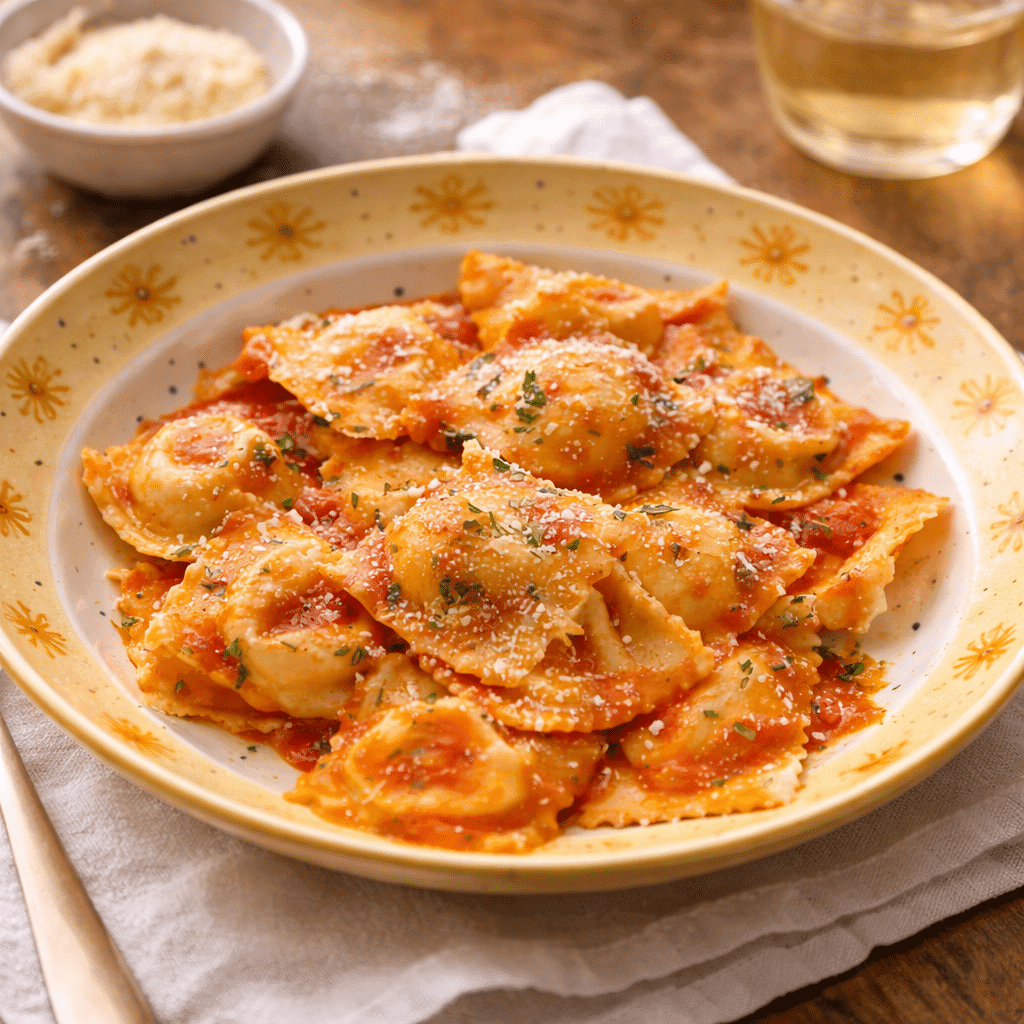
If you plan meals ahead, Cheese Ravioli stores just as well as freezer-friendly classics like Chicken Pot Pie, making future dinners easier without sacrificing flavor.
Skylar’s Touch
Making Cheese Ravioli at home always brings my family into the kitchen, whether they’re helping roll dough or waiting patiently at the table. I hope this recipe brings that same warmth into your home. Take your time, enjoy the process, and share the results with people you love. Homemade food like this always tastes better when it’s made together.
Frequently Asked Questions
Can I make Cheese Ravioli without a pasta machine?
Yes, you can roll the dough by hand using a rolling pin. Work slowly, turn the dough often, and roll until it becomes thin enough to see light through it.
What sauce works best with Cheese Ravioli?
Cheese Ravioli pairs well with marinara, simple butter sauce, or sage brown butter. Light sauces highlight the filling without overpowering it.
Why does my Cheese Ravioli feel chewy?
Chewy texture usually means the dough needed more resting time or additional kneading. Proper rest helps the pasta relax and cook tender.
Can I freeze Cheese Ravioli before cooking?
Yes, uncooked Cheese Ravioli freezes well. Freeze in a single layer first, then store airtight and cook directly from frozen.
Cheese Ravioli Recipe
Homemade Cheese Ravioli made with tender fresh pasta and a creamy three-cheese filling. A comforting from-scratch recipe perfect for family dinners or special weekends.
- Prep Time: PT1H30M
- Cook Time: PT10M
- Total Time: PT1H40M
- Yield: 4 servings
- Category: Dinner
- Method: Boiling
- Cuisine: Italian
Ingredients
All-purpose flour
Eggs
Olive oil
Salt
Semolina flour
Ricotta cheese
Parmesan cheese
Fresh mozzarella
Nutmeg
Black pepper
Instructions
Step 1: Build and knead the pasta dough until smooth and elastic
Step 2: Rest the dough at room temperature
Step 3: Prepare the cheese filling and chill
Step 4: Roll the pasta dough into thin sheets
Step 5: Pipe filling and seal ravioli
Step 6: Cut and rest the ravioli briefly
Step 7: Simmer gently in salted water and serve with sauce
Notes
Press out air when sealing ravioli to prevent bursting. Cook at a gentle simmer rather than a rapid boil.
Nutrition
- Serving Size: 1 plate
- Calories: 420
- Sugar: 3
- Sodium: 520
- Fat: 17
- Saturated Fat: 8
- Carbohydrates: 48
- Fiber: 2
- Protein: 18
- Cholesterol: 115
Keywords: Cheese Ravioli