
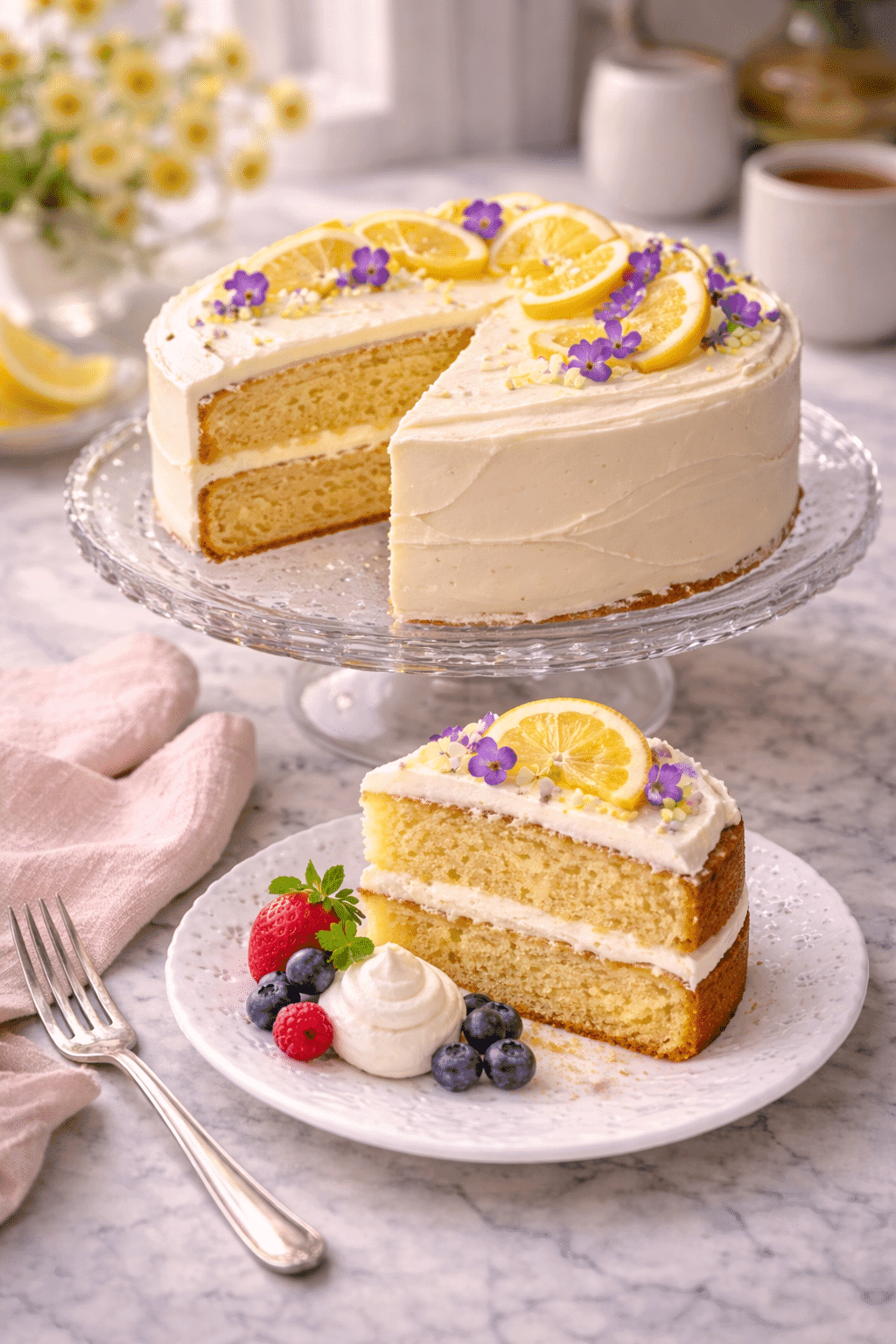
A lemon cake has this magical way of turning an ordinary day into something special. Its golden layers are soft, buttery, and infused with the lively scent of fresh lemons. Every bite bursts with brightness—just enough tang to make you smile and just enough sweetness to keep you reaching for another slice.
I first fell in love with this lemon cake while baking with my mother in our Los Angeles kitchen. We’d zest lemons together, the fragrance filling the air, as we laughed about who got more flour on their apron. Those moments were pure joy.
Years later, this recipe became a family tradition. I make it when my daughters help me mix batter or when Daniel craves something light yet indulgent after dinner. It’s simple enough for a weekday bake but elegant enough for birthdays and brunches.
And yes, this lemon cake tastes even better the next day—if it lasts that long.
For more cozy baking inspiration, try my Funfetti Cake or this moist Chocolate Cake—both easy, delicious options that pair beautifully with tea or coffee.
You’ll love this lemon cake because it captures everything you want in a dessert—bright flavor, fluffy texture, and that unmistakable homemade charm.
- Fresh lemon flavor: Made with real lemon zest and juice for a naturally tangy sweetness.
- Perfectly moist crumb: Buttermilk and butter keep every bite soft, rich, and tender.
- Beginner-friendly: Straightforward steps and no special equipment needed.
- Beautiful presentation: Golden layers topped with smooth lemon cream cheese frosting make it stunning for any occasion.
- Balanced sweetness: The frosting enhances rather than overpowers the cake’s citrusy notes.
It’s the kind of dessert that makes your kitchen smell like sunshine and leaves everyone asking for seconds. Pair a slice with afternoon tea or serve it chilled after dinner for the ultimate lemony treat.
Key Ingredients for the Perfect Lemon Cake
The beauty of a lemon cake lies in its simplicity. Each ingredient has a purpose, coming together to create a moist, fluffy crumb and a bright, refreshing flavor. Let’s look at what makes this cake shine and why these components matter.
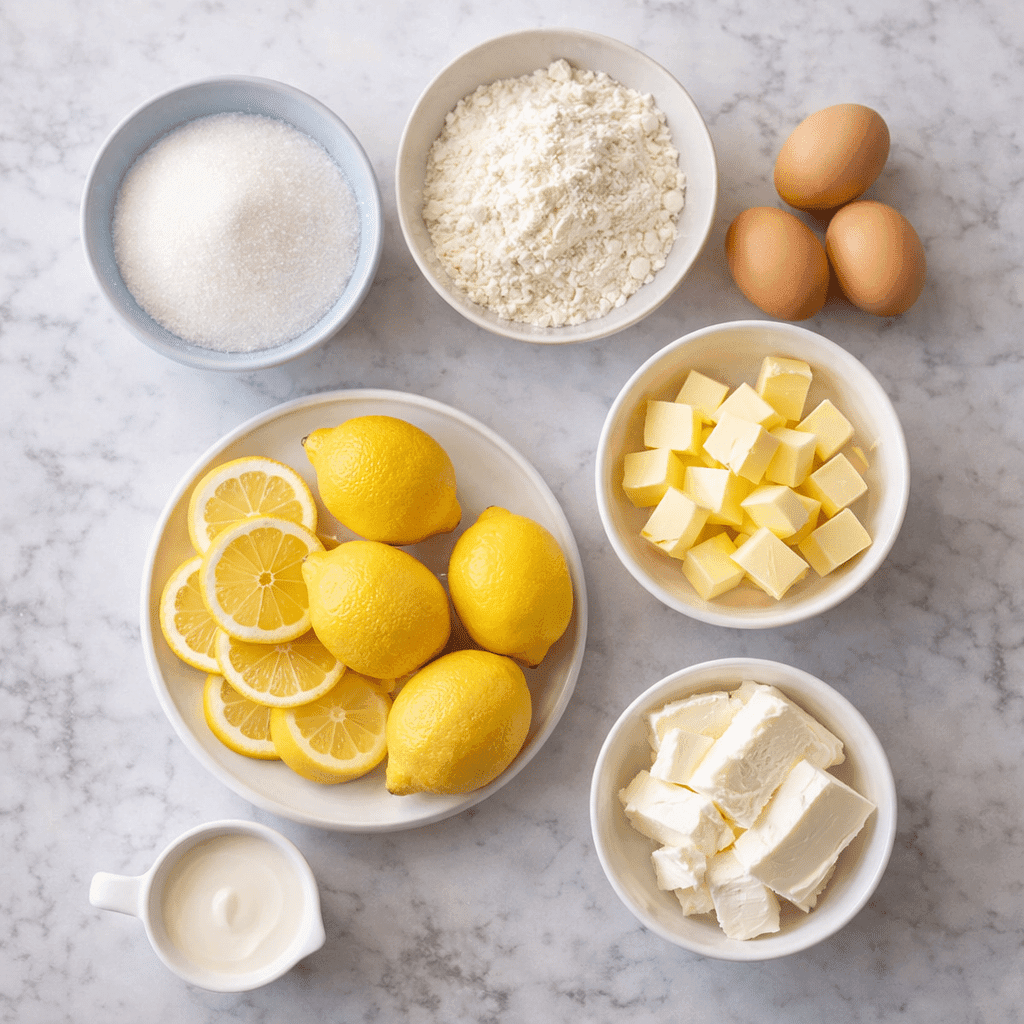
All-purpose flour
This is the foundation of your lemon cake. It gives structure and stability without making the crumb dense. For the softest texture, always spoon and level your flour rather than scooping directly from the bag.
Baking powder and baking soda
These two leavening agents are what make your lemon cake rise high and stay light. Baking powder gives an even lift, while baking soda reacts with the lemon juice for a little extra spring. Together, they help the cake bake up tender and airy.
Unsalted butter
Butter adds rich flavor and that melt-in-your-mouth texture. Using unsalted butter lets you control the salt balance perfectly. Creaming it with sugar incorporates air, setting the stage for a soft, fluffy cake.
Granulated sugar
Beyond sweetness, sugar traps moisture, keeping your cake soft. Beating it with lemon zest infuses the batter with natural citrus oils, boosting the flavor from the very first step.
Lemon zest and lemon juice
Fresh lemon zest gives that signature brightness, while lemon juice adds a gentle tang. Together, they bring life and fragrance to the cake. Avoid bottled juice—it can taste dull or metallic. Fresh lemons are non-negotiable for the best results.
Buttermilk
This simple ingredient keeps the crumb moist and tender while adding a subtle tang that pairs beautifully with the lemon. The acidity also activates the baking soda, ensuring your cake bakes up perfectly fluffy.
Eggs
Eggs bind everything together, adding richness and helping the cake maintain structure. Make sure they’re at room temperature to blend smoothly with the butter and sugar.
Cream cheese and powdered sugar (for frosting)
The frosting balances the cake’s brightness with creamy sweetness. Cream cheese gives it that signature tang, while powdered sugar creates a silky, pipeable texture.
For similar bright and creamy desserts, try my Mini Cheesecakes or Black Forest Cake—both share the same balance of freshness and smooth frosting you’ll love in this lemon version.
How Do You Keep a Lemon Cake Moist?
Keeping a lemon cake moist is one of the biggest concerns home bakers have—and thankfully, it’s easier than you think. The secret lies in three key factors: fat, acidity, and baking time. Butter and buttermilk supply richness and moisture that prevent the crumb from drying out. The acidity from fresh lemon juice works with the baking soda to tenderize the gluten, making each bite soft and light.
Overbaking, however, is the most common culprit of dryness. Always test your lemon cake a few minutes early by gently pressing the top—it should spring back lightly. If you prefer to be extra cautious, wrap the warm cake layers in plastic after cooling for about 10 minutes. This traps steam and keeps them ultra-moist until frosting time.
Once frosted with the lemon cream cheese topping, your lemon cake will stay perfectly tender for days.
Pro Tips for Success
- Use room-temperature ingredients. Cold butter or eggs can cause curdling in your batter. When everything is at the same temperature, your lemon cake mixes evenly and bakes with a tender crumb.
- Zest first, juice second. Always zest your lemons before cutting them for juice—it’s easier and ensures you capture all those fragrant oils that give the cake its citrus depth.
- Don’t overmix. Once the flour goes in, mix only until combined. Overmixing develops too much gluten and can make your lemon cake dense instead of fluffy.
- Check your oven temperature. Every oven runs differently. An inexpensive oven thermometer ensures accuracy and prevents overbaking—a must for keeping the cake moist.
- Wrap while slightly warm. To lock in freshness, wrap the cooled layers in plastic before frosting. This step helps maintain moisture and adds that soft, bakery-style texture.
- Use fresh lemons only. Bottled lemon juice dulls the flavor and acidity. Freshly squeezed juice delivers the bright, vibrant notes that make a lemon cake irresistible.
- Frost on a cool cake. Never frost while warm—heat melts the cream cheese frosting, making it slide or split. Let your layers chill slightly before spreading for a clean, smooth finish.
How to Make Lemon Cake
Making a homemade lemon cake is surprisingly easy once you know the key steps. Here’s how to get that soft, moist, and flavorful result every time.
1. Prepare your pans and preheat the oven.
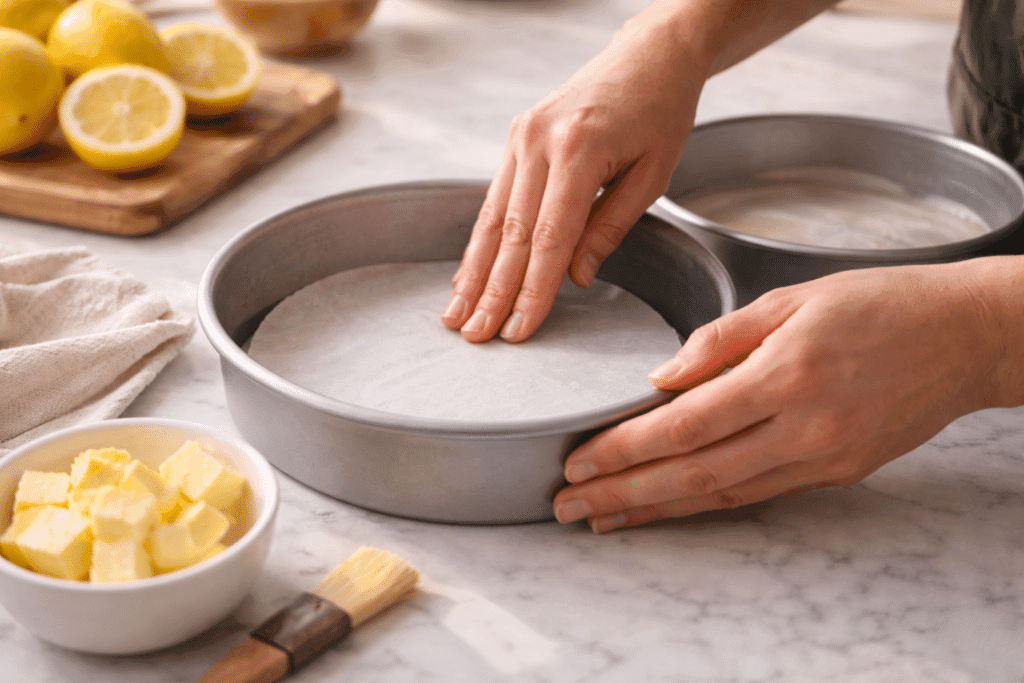
Set your oven to 350°F (177°C). Lightly grease two 8-inch round cake pans with butter or nonstick spray, then line the bottoms with parchment paper. If you have baking strips, wrap them around the pans—this helps your lemon cake bake evenly without doming in the center. Set them aside while you prepare the batter.
2. Mix your dry ingredients.
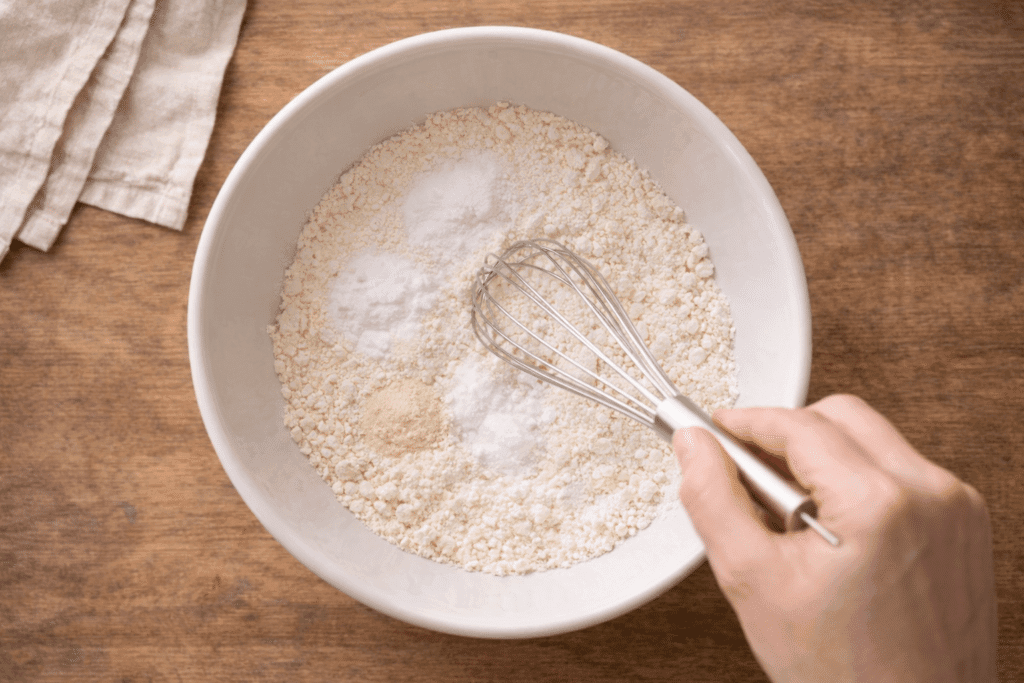
In a medium bowl, whisk together flour, baking powder, baking soda, and salt. This step ensures even distribution of leavening agents so your lemon cake rises beautifully. Always whisk dry ingredients before adding them to wet ones to prevent lumps and pockets of flour.
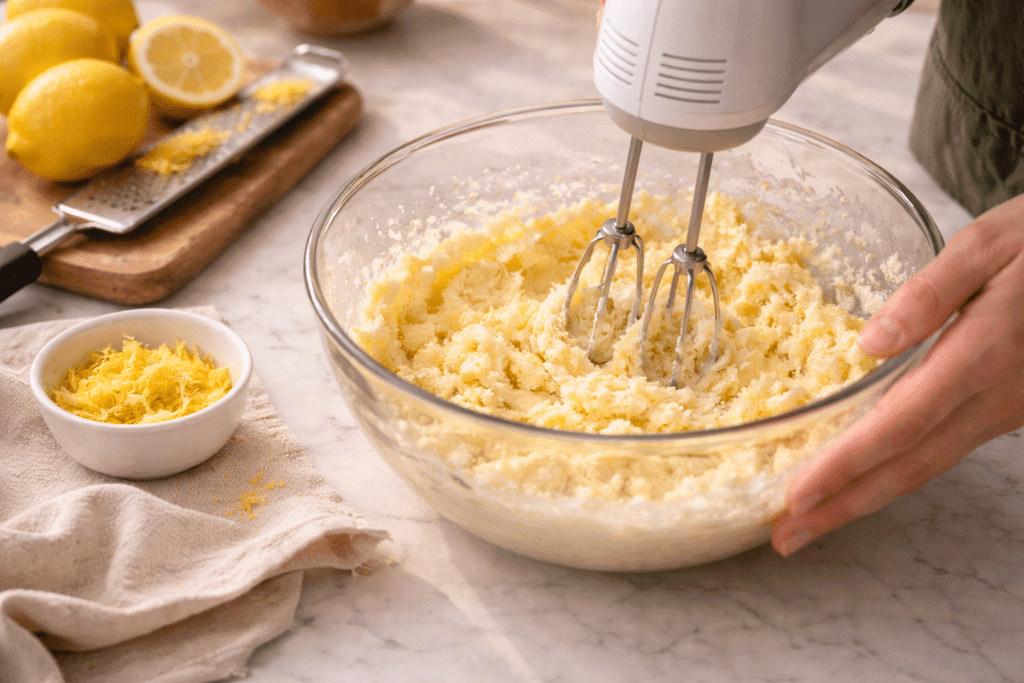
3. Cream butter, sugar, and lemon zest.
In a large mixing bowl or stand mixer, beat the softened butter on medium speed for about 1 minute until smooth. Add granulated sugar and fresh lemon zest, then beat for another 4–5 minutes until the mixture is pale and fluffy. The lemon zest releases its natural oils, giving your lemon cake that signature bright flavor.
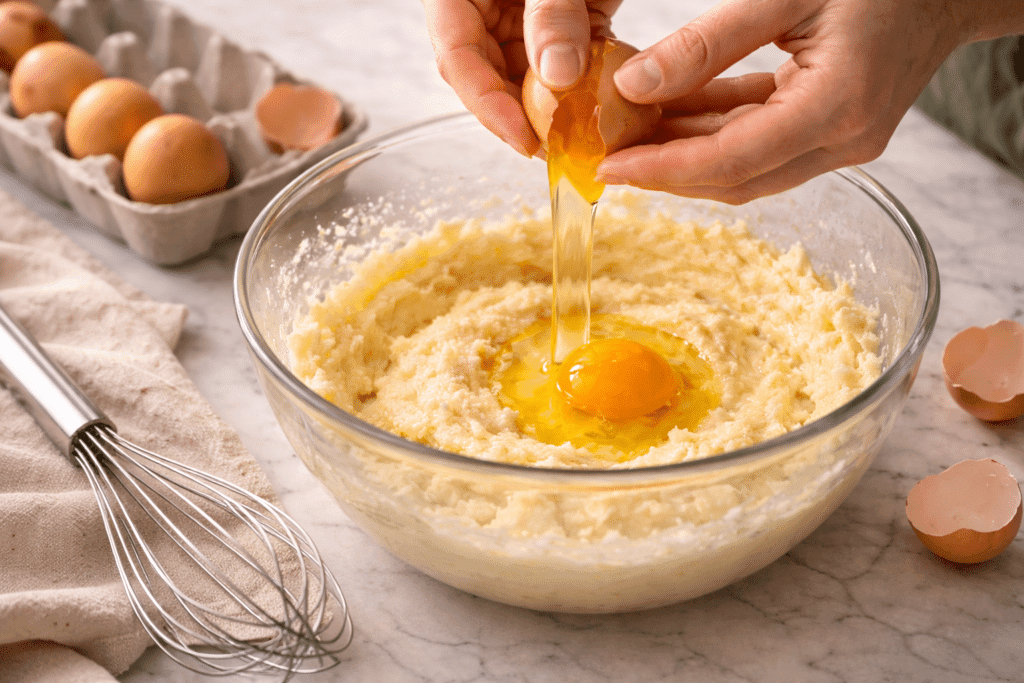
4. Add eggs one at a time.
Crack in the eggs, one by one, mixing well after each addition. This ensures a smooth, uniform batter. Scrape down the sides of the bowl to make sure everything blends evenly.
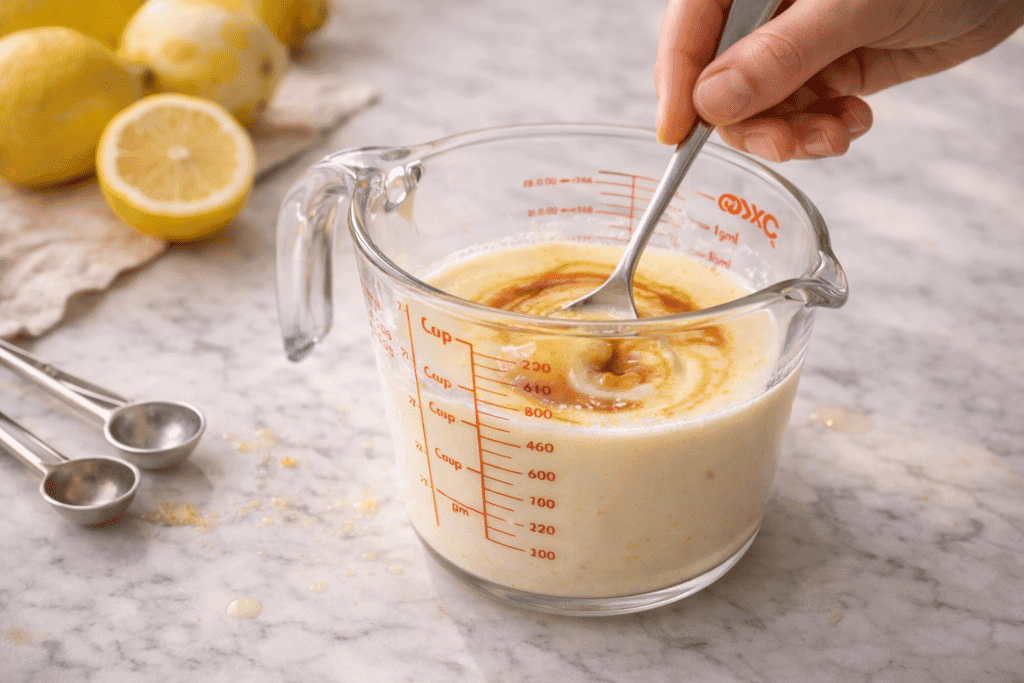
5. Combine the wet ingredients.
In a measuring cup, stir together buttermilk, fresh lemon juice, and vanilla extract. The buttermilk adds richness while lemon juice provides the perfect tang to your lemon cake.
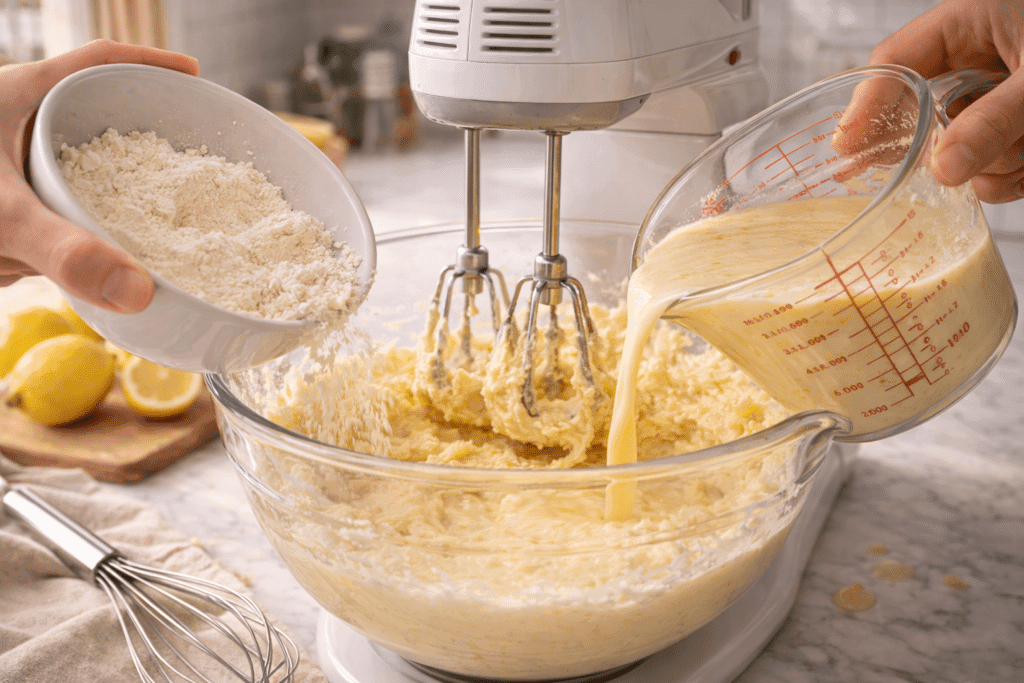
6. Alternate the dry and wet mixtures.
With the mixer on low speed, add one-third of the dry ingredients, followed by half of the buttermilk mixture. Continue alternating until everything is combined, finishing with the dry ingredients. Avoid overmixing—stop once the batter is smooth.
7. Divide and bake.
Evenly divide the batter between your prepared pans. Bake for 35–40 minutes, or until the center springs back lightly to the touch and a toothpick comes out clean. Overbaking will dry out your lemon cake, so keep an eye on it near the end.
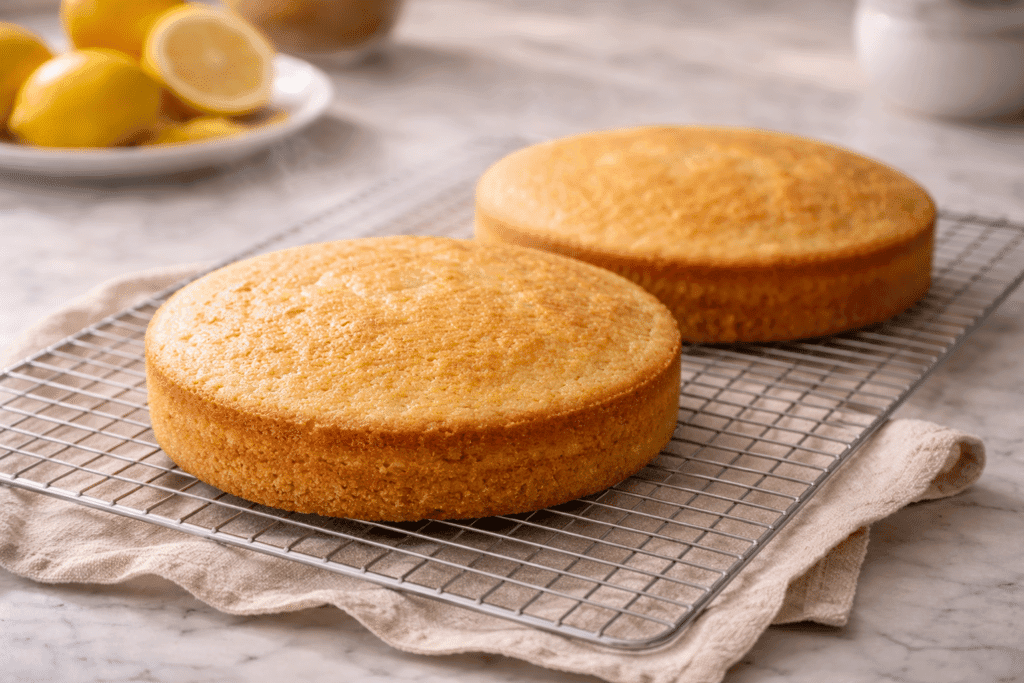
8. Cool the layers.
Allow the cakes to cool in the pans for 10–15 minutes before transferring them to a wire rack. Let them cool completely before frosting. Wrapping the layers while slightly warm helps retain moisture for a melt-in-your-mouth texture.
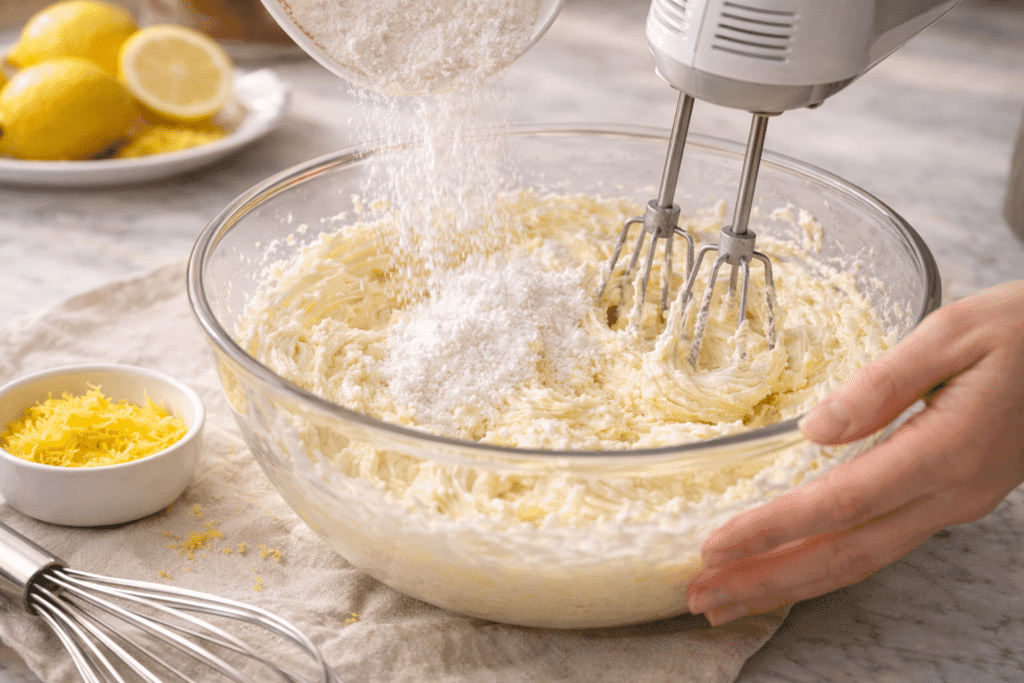
9. Make the frosting.
In a mixing bowl, beat softened butter and cream cheese together until smooth. Add lemon zest, powdered sugar, and lemon juice, beating on low until creamy, then on medium until light and fluffy. This frosting gives your lemon cake its luxurious, tangy finish.
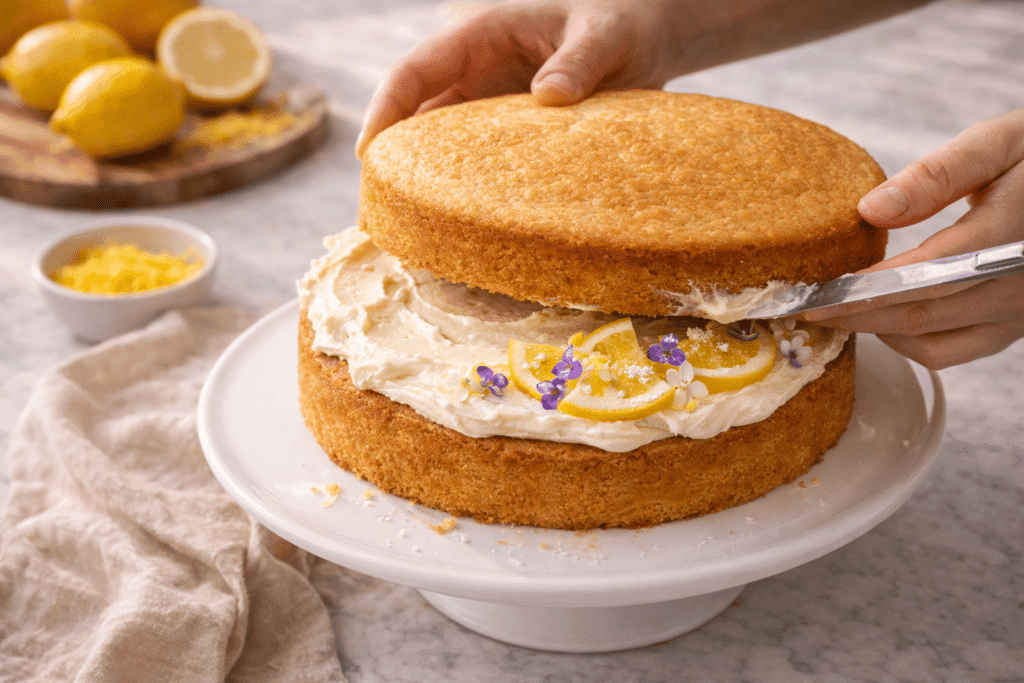
10. Assemble your lemon cake.
Place one layer on your serving plate. Spread about one cup of frosting evenly over the top. Stack the second layer and frost the entire cake with the remaining cream cheese mixture. For a clean presentation, chill for 15 minutes before slicing. Garnish with thin lemon slices or edible flowers for a fresh, sunny look.
Serving Suggestions
A slice of lemon cake is pure sunshine on a plate—soft, fragrant, and slightly tangy. It pairs beautifully with a cup of hot tea or a light roast coffee for a refreshing afternoon treat. For a spring brunch, serve it chilled with a dollop of whipped cream and fresh berries on the side. If you’re hosting a dessert table, balance its brightness with something rich and creamy like my Oreo Pie or a silky chocolate mousse. The contrast of flavors makes every bite memorable.

Storage & Make-Ahead Tips
Your lemon cake stays wonderfully moist for several days if stored properly. At room temperature, keep it covered with a cake dome or wrap slices tightly in plastic for up to 3 days. For longer freshness, refrigerate it for up to 5 days—just bring it to room temperature before serving to revive its soft texture. To freeze, wrap unfrosted layers tightly in plastic and foil, then store for up to 2 months. When ready to serve, thaw overnight in the fridge.
Skylar’s Touch
Baking this lemon cake always reminds me why I love sharing recipes—it’s about joy, comfort, and the little moments around the table. Whether you bake it for friends, family, or yourself, I hope it brings that same sunshine into your kitchen. If you enjoy bright, homemade desserts, try my Red Velvet Cupcakes next—it’s another slice of happiness worth sharing.
Frequently Asked Questions About Lemon Cake
1. What makes lemon cake taste so good?
It’s all about balance! The combination of butter, sugar, and fresh lemon zest creates that signature sweet-tart flavor. The zest brings essential oils from the peel, giving your lemon cake a bright, aromatic finish. Fresh juice adds acidity, which enhances sweetness and keeps the cake tasting light.
2. How do you keep a lemon cake moist?
The key to a perfectly moist lemon cake is using buttermilk, room-temperature butter, and not overbaking. These three together ensure the cake’s texture stays soft and rich.
3. Can I use bottled lemon juice instead of fresh lemons in cake?
While you can use bottled juice in a pinch, it won’t give the same vibrant flavor or freshness. Bottled juice lacks the essential oils and brightness of real lemons, and it can taste slightly bitter. Always use fresh lemons for the best lemon cake flavor.
4. What frosting goes best with lemon cake?
A tangy cream cheese frosting pairs beautifully with lemon cake because it complements the tartness without overwhelming it. You can also try a light vanilla buttercream or a whipped mascarpone frosting for an elegant touch. For a fun twist, add a thin layer of lemon curd between the cake layers—it’s irresistible.
Lemon Cake

A soft, buttery lemon cake bursting with fresh citrus flavor and layered with a tangy cream cheese frosting. Perfect for celebrations or cozy gatherings.
- Prep Time: PT20M
- Cook Time: PT40M
- Total Time: PT1H
- Yield: 12 servings
- Category: Dessert
- Method: Baking
- Cuisine: American
- Diet: Vegetarian
Ingredients
For the Cake:
All-purpose flour
Baking powder
Baking soda
Salt
Unsalted butter
Granulated sugar
Lemon zest
Eggs
Buttermilk
Lemon juice
Vanilla extract
For the Frosting:
Cream cheese
Unsalted butter
Powdered sugar
Lemon zest
Lemon juice
Vanilla extract
Instructions
Step 1: Preheat oven to 350°F and prepare two 8-inch cake pans with parchment paper.
Step 2: Whisk flour, baking powder, baking soda, and salt in a bowl.
Step 3: Cream butter, sugar, and lemon zest until light and fluffy.
Step 4: Add eggs one at a time, mixing well.
Step 5: Stir together buttermilk, lemon juice, and vanilla extract.
Step 6: Alternate adding dry and wet ingredients, ending with the dry.
Step 7: Divide batter into pans and bake 35–40 minutes until springy.
Step 8: Cool completely before frosting.
Step 9: Beat butter and cream cheese until creamy.
Step 10: Add powdered sugar, lemon zest, and juice; whip until fluffy.
Step 11: Frost cake and decorate with lemon slices.
Notes
For best flavor, use fresh lemon juice—not bottled.
Wrap cake layers in plastic while slightly warm to retain moisture.
Refrigerate leftovers in an airtight container for up to 5 days.
Nutrition
- Serving Size: 1 slice
- Calories: 420
- Sugar: 45g
- Sodium: 180mg
- Fat: 20g
- Saturated Fat: 12g
- Unsaturated Fat: 6g
- Trans Fat: 0g
- Carbohydrates: 55g
- Fiber: 1g
- Protein: 5g
- Cholesterol: 80mg
Keywords: Lemon Cake, Lemon Dessert, Homemade Cake, Lemon Frosting