
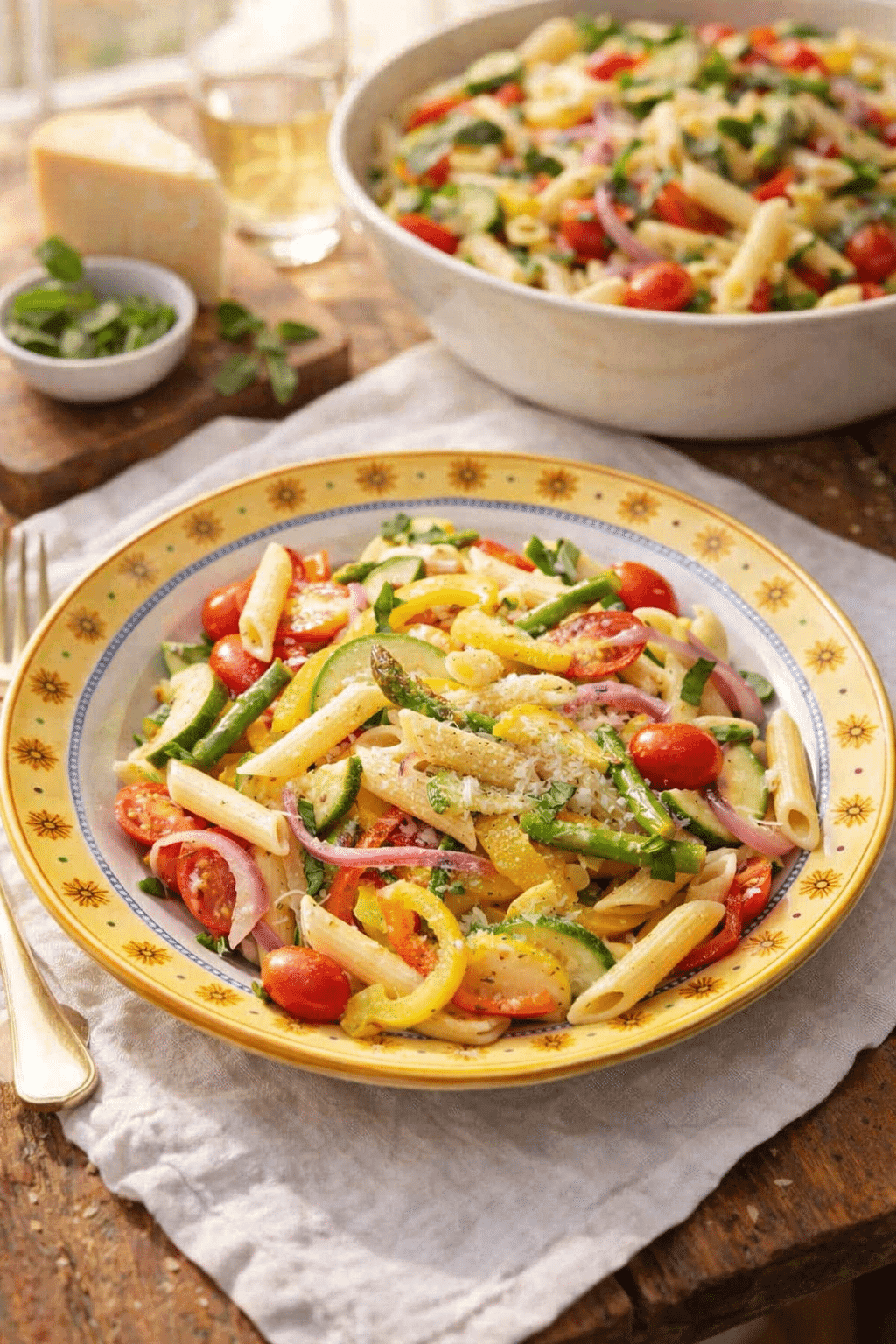
Pasta Primavera recipe has always been one of those dishes I turn to when my fridge looks crowded with vegetables and dinner still needs to feel comforting. The first time I tested this Pasta Primavera recipe at home, I wanted something bright, fresh, and quick enough to pull together between school pickups and homework time. This version delivers tender pasta coated in buttery lemon flavor, with crisp-tender vegetables that still taste like themselves. I make this Pasta Primavera most often in spring and summer, but it works year-round when I want a lighter dinner that still satisfies. It’s simple, colorful, and friendly for beginners, which makes it a regular in our family rotation.
When I want a lighter pasta night, I often pair this dish with inspiration from my Cheese Ravioli Recipe, which also keeps flavors simple and comforting without heavy sauce.
You will love how this Pasta Primavera fits easily into real life cooking. It cooks quickly, uses simple vegetables, and delivers fresh flavor without heavy sauce. The pasta stays tender, the vegetables keep their bite, and the lemon butter brings everything together. This recipe works well for weeknights, meatless dinners, and casual family meals, even when your timing isn’t perfect.
If you enjoy quick dinners that don’t require complicated steps, this Pasta Primavera fits right alongside weeknight favorites like my Shrimp Linguine Recipe, which also comes together fast and feels fresh.
Table of Contents
Key Ingredients
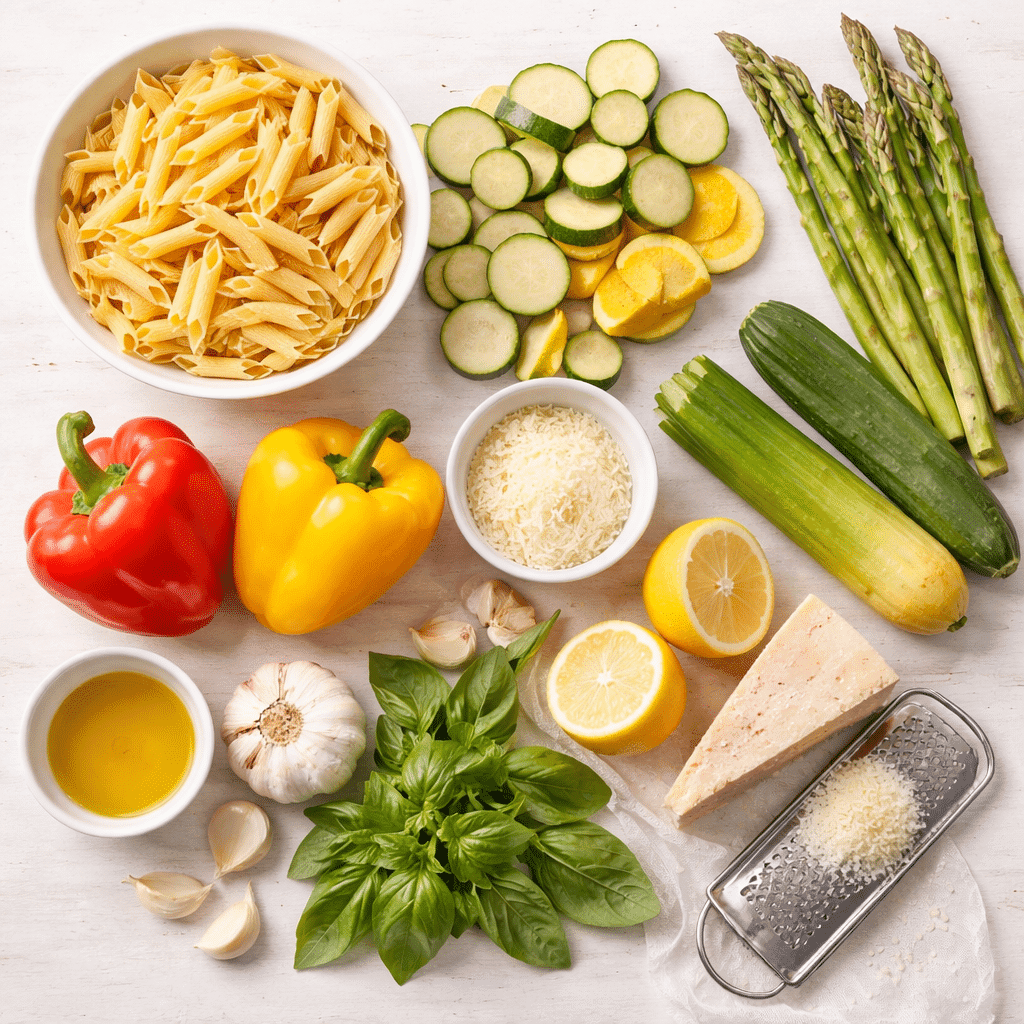
This Pasta Primavera relies on fresh vegetables and simple pantry staples. Each ingredient plays a clear role, so the dish tastes bright, balanced, and comforting without feeling heavy.
Penne Pasta
Penne holds the light lemon-butter coating well and traps small pieces of vegetables, so every bite tastes complete.
Olive Oil
Olive oil starts the cooking process and helps the vegetables soften while keeping their natural flavor intact.
Red Onion
Red onion adds gentle sweetness and depth as it cooks, creating a flavorful base without overpowering the dish.
Bell Peppers
Bell peppers bring color, mild sweetness, and a slight crunch that keeps the Pasta Primavera fresh and lively.
Zucchini and Yellow Squash
These vegetables cook quickly and stay tender, adding body while keeping the pasta light.
Asparagus
Asparagus adds texture and a clean, earthy taste that pairs naturally with pasta and lemon.
Garlic and Italian Herbs
Garlic builds aroma, while Italian herbs tie all the vegetables together with familiar flavor.
Should vegetables be cooked separately for Pasta Primavera?
Many home cooks wonder if they should cook the vegetables separately when making Pasta Primavera. Cooking the vegetables in a hot skillet before mixing them with the pasta works best. This method keeps the vegetables crisp-tender instead of soft or watery. It also helps each vegetable keep its own flavor. Once you combine everything with pasta, lemon juice, and butter, the dish comes together quickly without overcooking. This simple step keeps Pasta Primavera fresh, colorful, and balanced every time.
Pro Tips for Success
Cook pasta just until tender so it keeps a slight bite. This texture helps the Pasta Primavera hold up once mixed with vegetables and sauce.
Salt the pasta water well because this step builds flavor from the inside and prevents bland pasta later.
Keep the skillet hot when cooking vegetables. High heat cooks them quickly and keeps them crisp instead of soft.
Add garlic near the end of sautéing. Garlic burns fast, and late timing keeps the flavor warm and pleasant.
Use pasta water slowly when mixing everything together. A small splash helps coat the pasta without making it watery.
Remove vegetables from heat early so they stay bright and colorful instead of dull.
Serve right away while the butter stays glossy and the vegetables taste fresh. Pasta Primavera always shines most when enjoyed immediately.
How to Make Pasta Primavera
This Pasta Primavera comes together in a calm, steady flow. Cooking the pasta and vegetables at the same time keeps everything fresh and prevents overcooking. Follow these steps in order, and the dish will taste light, balanced, and full of color.
Step 1:
Bring a large pot of well-salted water to a rolling boil. Add the penne pasta and cook until tender with a slight bite. This texture helps the pasta stay firm once mixed with vegetables and sauce.
Step 2:
Before draining, scoop out some pasta water and set it aside. Drain the pasta fully, then return it to the warm pot. Keeping the pasta warm helps everything combine smoothly later.
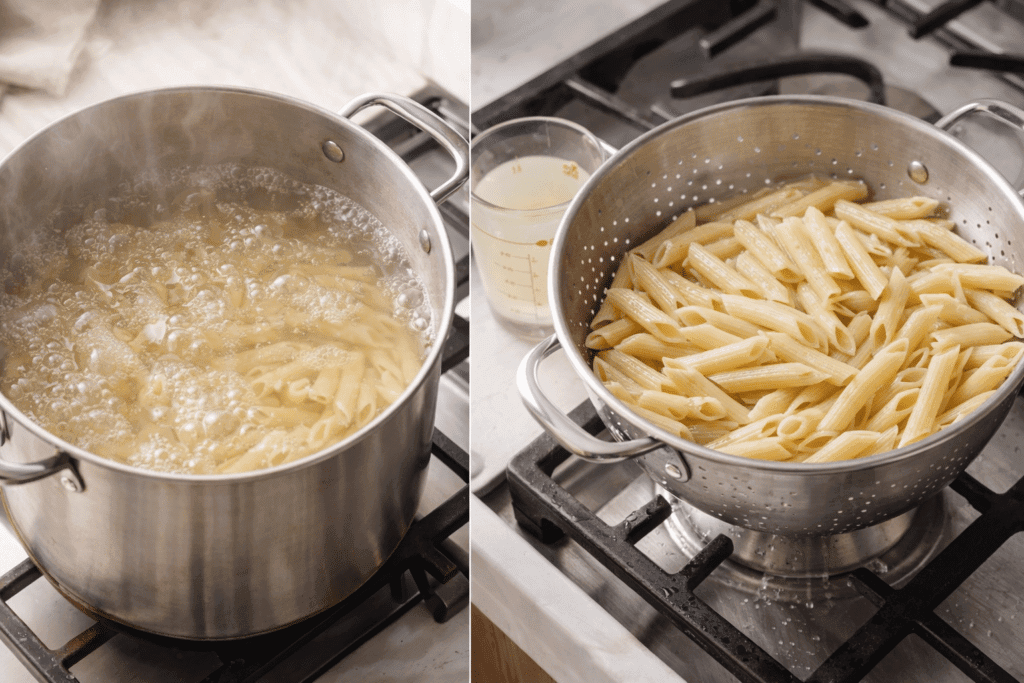
Using reserved pasta water here works the same way it does in my Chicken Alfredo Recipe, helping the sauce cling smoothly without feeling heavy.
Step 3:
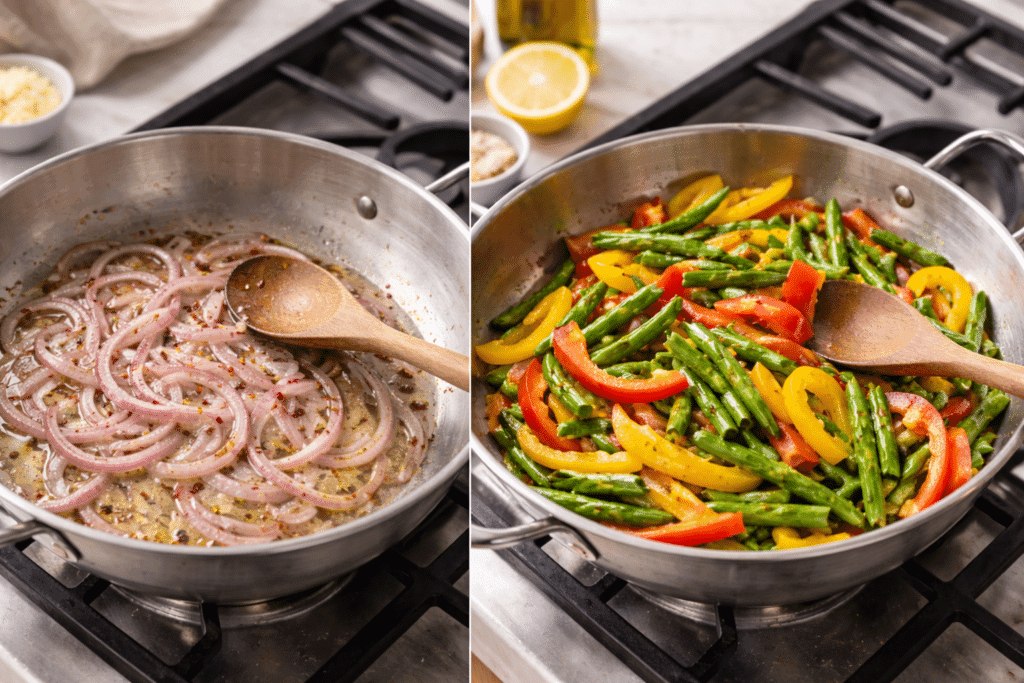
While the pasta cooks, heat olive oil in a wide skillet over medium-high heat. Add the sliced red onion and cook, stirring often, until it softens and releases a mild sweetness.
Step 4:
Add the bell peppers and asparagus to the skillet. Cook briefly, stirring often, so they soften slightly while staying crisp. This step builds both color and texture.
Step 5:
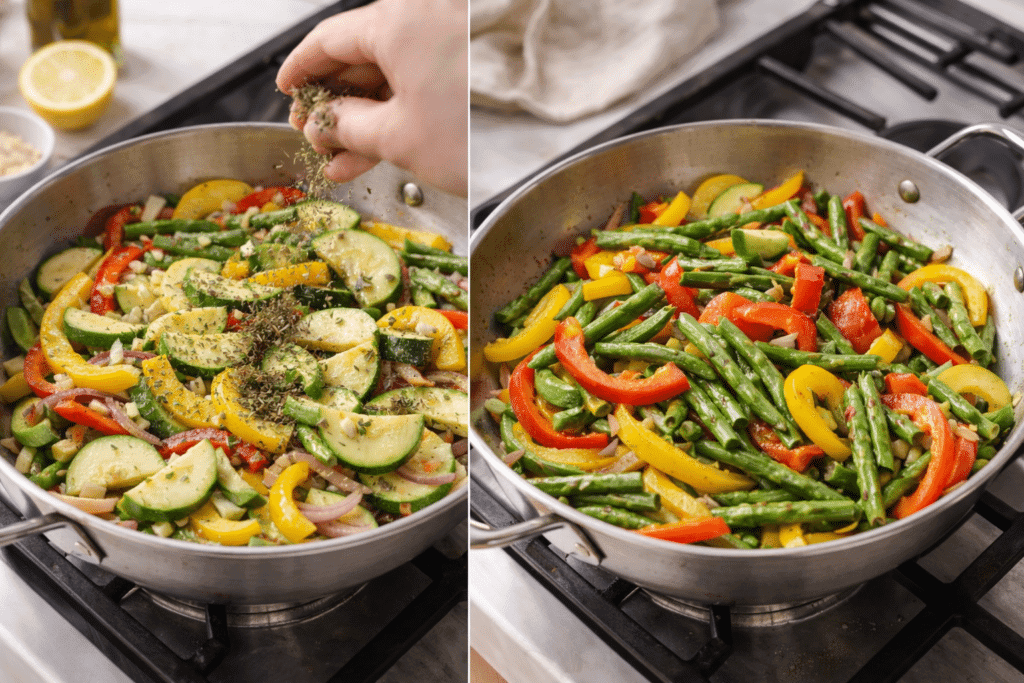
Add the zucchini, yellow squash, and minced garlic. Stir constantly and cook just until the vegetables begin to turn tender. Sprinkle in the Italian herbs, salt, and black pepper so the seasoning spreads evenly.
Step 6:
Remove the skillet from the heat once the vegetables look bright and crisp-tender. Stopping the heat at this point keeps the vegetables from turning soft.
Step 7:
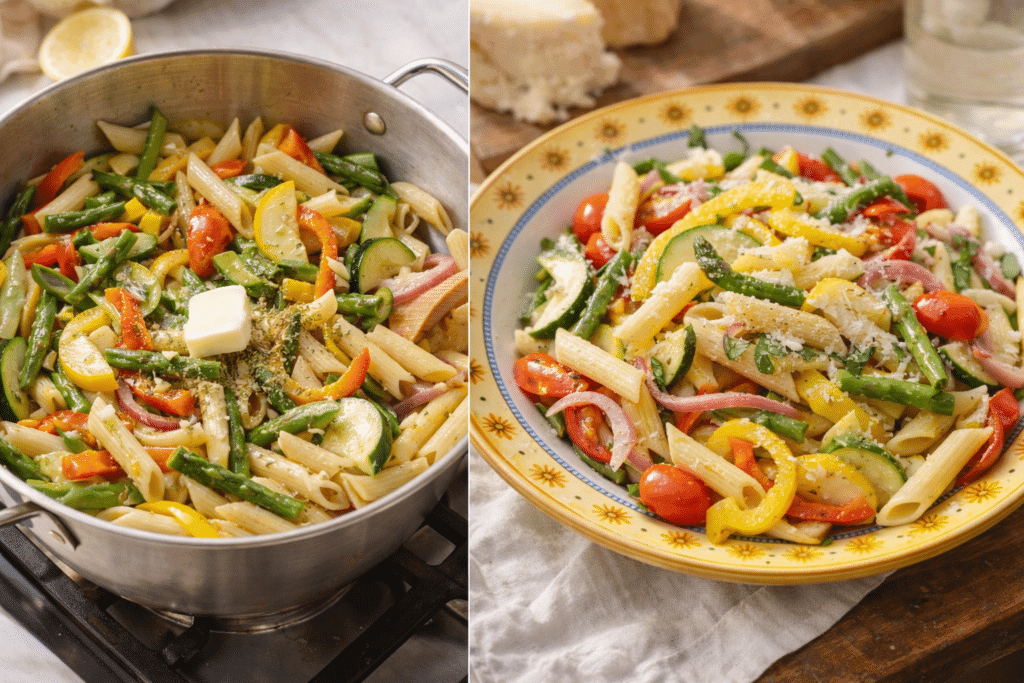
Transfer the vegetables to the pot with the cooked pasta. Gently fold everything together, then add the halved tomatoes, lemon juice, butter, and a small splash of the reserved pasta water. Stir slowly until the butter melts and coats the pasta lightly.
Step 8:
Taste and adjust seasoning if needed. Serve the Pasta Primavera right away, finishing each bowl with grated parmesan and fresh basil for a clean, fresh finish.
Serving Suggestions
Pasta Primavera tastes best when served right after cooking, while the vegetables stay bright and the sauce lightly coats the pasta. I like placing the pot in the center of the table and letting everyone add their own parmesan and fresh basil.
This dish works well as a complete meatless meal, especially on warm evenings when heavy food feels like too much. It also pairs nicely with grilled chicken, shrimp, or salmon if you want extra protein without changing the fresh balance.
For sides, a crisp green salad with lemon dressing keeps the meal light and refreshing. Warm garlic bread or a simple baguette helps scoop up the buttery lemon sauce.
Pasta Primavera fits weeknight dinners, casual gatherings, and family-style meals. Its color and flavor make it feel special while staying simple and comforting.
For a complete meal, I often serve Pasta Primavera with simple sides inspired by dishes like my Green Bean Casserole Recipe, which adds balance without overpowering the plate.
Storage & Make-Ahead Tips
Pasta Primavera stores well when handled gently and kept simple. Let leftovers cool slightly before storing to keep the vegetables from turning soft.
For short-term storage, place the pasta in an airtight container and keep it in the refrigerator. It stays good for up to three days, though the vegetables taste best within the first two days.
When reheating, warm it slowly on the stove or in the microwave. Add a small splash of water or broth to loosen the pasta and bring back the light coating.
This dish works for light make-ahead prep, but it tastes best freshly made. You can slice all vegetables a day in advance and store them separately in the fridge. Cook the pasta and vegetables just before serving for the brightest flavor and texture.
Freezing is not recommended, as the vegetables lose their crisp bite once thawed.
Sienna’s Touch
This Pasta Primavera always reminds me why I love teaching home cooks. It’s simple, flexible, and full of life, just like our busy kitchen at home. I hope this dish brings color and comfort to your table. If you make it, share it with people you love and enjoy every fresh bite.
Frequently Asked Questions
What does Pasta Primavera mean?
Pasta Primavera means “spring pasta.” The name refers to the fresh vegetables used in the dish, not a traditional Italian origin. It celebrates colorful produce and light flavors that feel fresh and seasonal.
Is Pasta Primavera healthy?
Yes, Pasta Primavera can feel lighter than many pasta dishes because it relies on vegetables, olive oil, and lemon instead of heavy sauces. You can also use whole wheat pasta for added fiber.
Can I add protein to Pasta Primavera?
You can easily add grilled chicken, shrimp, or chickpeas. These options blend well without overpowering the vegetables or lemon flavor.
Can Pasta Primavera be made vegan?
Yes, simply skip the butter and cheese or replace them with plant-based options. The vegetables, pasta, and lemon still create plenty of flavor on their own.
Pasta Primavera Recipe
Pasta Primavera is a light and colorful pasta dish made with fresh vegetables, lemon, and parmesan. It comes together quickly and works well for busy weeknights or relaxed family dinners.
- Prep Time: PT15M
- Cook Time: PT15M
- Total Time: PT30M
- Yield: 4
- Category: Dinner
- Method: Stovetop
- Cuisine: Italian-American
- Diet: Vegetarian
Ingredients
Penne pasta
Olive oil
Red onion
Red bell pepper
Yellow bell pepper
Zucchini
Yellow squash
Asparagus
Garlic
Italian herbs
Salt
Black pepper
Grape tomatoes
Fresh lemon juice
Unsalted butter
Parmesan cheese
Fresh basil
Instructions
Step 1: Cook the pasta in salted water until tender and reserve pasta water.
Step 2: Heat olive oil in a skillet and cook the onion briefly.
Step 3: Add bell peppers and asparagus and cook until slightly tender.
Step 4: Add zucchini, squash, and garlic and cook just until tender.
Step 5: Season with Italian herbs, salt, and pepper.
Step 6: Remove vegetables from heat to prevent overcooking.
Step 7: Combine pasta, vegetables, tomatoes, lemon juice, butter, and pasta water.
Step 8: Serve immediately with parmesan cheese and fresh basil.
Notes
Best served fresh.
Reheat gently with a splash of water.
Freezing is not recommended.
Nutrition
- Serving Size: 1
- Calories: 420
- Fat: 14
- Carbohydrates: 58
- Protein: 14
Keywords: Pasta Primavera