
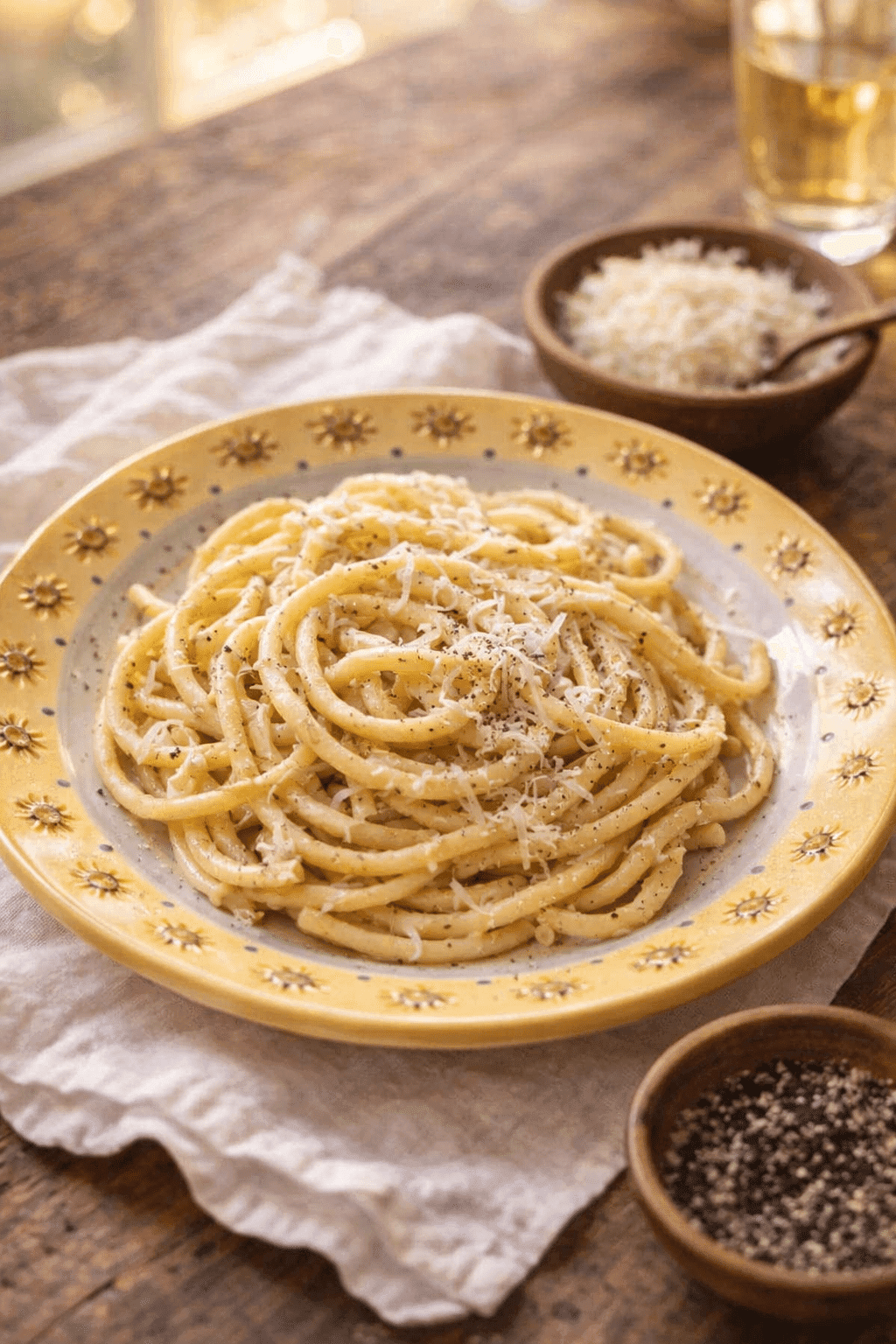
Cacio E Pepe Recipe starts with the kind of pasta dish I lean on when I want comfort without fuss. The first time I made Cacio E Pepe at home, I couldn’t believe how rich it tasted with so few ingredients.
The pasta turns silky, the cheese melts into a glossy sauce, and the black pepper brings warmth without heat. Every bite feels balanced, cozy, and satisfying without feeling heavy.
I often make this on busy weeknights when dinner needs to feel special but quick, just like many of the pasta recipes I share on Recipes Preppy. It’s simple, but it never feels boring.
Testing this dish taught me that timing matters more than fancy tools and that patience really pays off. When I cook Cacio E Pepe for my family, everyone gathers around the stove, waiting for that first creamy bite. It feels classic, cozy, and deeply satisfying every single time.
I often make this on busy weeknights when dinner needs to feel special but quick, just like many of the pasta recipes I share on Recipes Preppy, including my cozy chicken pesto pasta that’s always a family favorite.
You’ll love this recipe because it uses simple pantry staples and still tastes rich and comforting. It comes together quickly, which makes it perfect for weeknights when time feels tight.
The texture turns creamy without cream, relying on technique instead of extra ingredients. It also pairs well with other Italian-inspired dinners from our Italian recipes collection, which makes planning a full, stress-free meal easy and enjoyable.
This dish also reminds me of other classic Italian comfort meals, such as my creamy fettuccine alfredo recipe, where technique matters just as much as ingredients.
Table of Contents
Key Ingredients
Cacio E Pepe relies on just a handful of ingredients, so each one plays a clear role in flavor and texture. When you understand why they matter, the recipe feels much easier and more reliable.
If you enjoy cheese-forward pasta dishes, you’ll probably love recipes like my cheese ravioli recipe, which also relies on simple ingredients and careful timing.
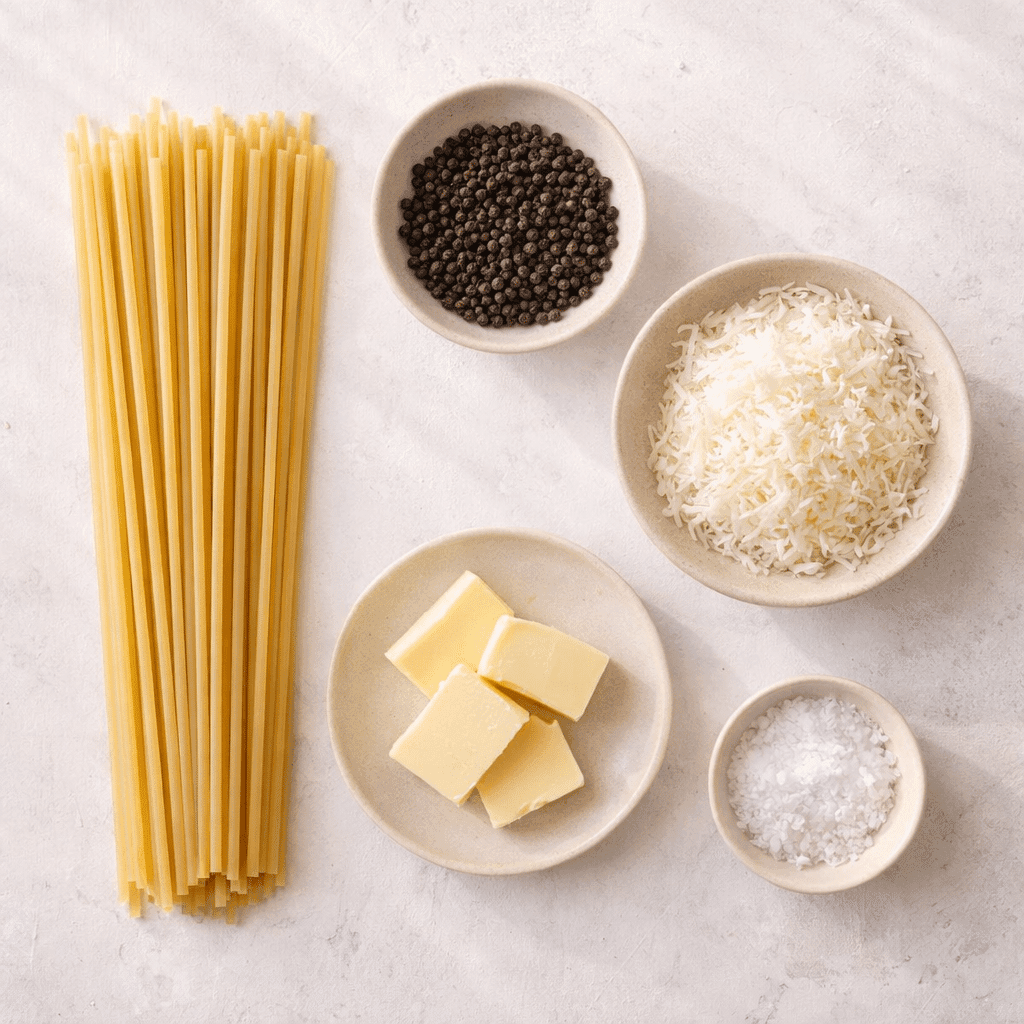
Pasta (bucatini or spaghetti) – Long pasta works best because it holds onto the creamy sauce. Bucatini gives a heartier bite, while spaghetti feels lighter, but both let the cheese and pepper cling well.
Salt – Properly salted water seasons the pasta from the inside. This step builds the base flavor of Cacio E Pepe and keeps the final dish from tasting flat.
Butter – Butter adds richness and helps create a smooth sauce. When lightly browned, it also brings a subtle nutty note that deepens the overall taste.
Freshly ground black pepper – Pepper is the star here. Fresh grinding releases aroma and warmth that define classic Cacio E Pepe.
Pecorino Romano cheese – This sharp, salty cheese melts into the pasta water and butter, forming the signature creamy coating without cream.
Reserved pasta water – Starchy pasta water binds everything together, turning cheese and butter into a glossy sauce that coats every strand.
Understanding how pasta water builds flavor here connects closely to sauce basics I explain in my classic spaghetti sauce recipe.
Why does Cacio E Pepe cheese turn clumpy instead of creamy?
Cacio E Pepe cheese usually turns clumpy when the heat stays too high or the cheese gets added too quickly. Pecorino Romano melts best with gentle warmth and constant movement. Lower the heat before adding the cheese and pour in warm pasta water to help it dissolve. Add the cheese in stages while tossing the pasta, and the sauce will turn smooth, glossy, and perfectly creamy instead of grainy.
Pro Tips for Success
• Use freshly grated Pecorino Romano every time. Pre-grated cheese doesn’t melt smoothly and can cause a grainy sauce, which takes away from the classic Cacio E Pepe texture.
• Grind the black pepper just before cooking. Fresh pepper releases bold aroma and warmth, giving the dish its signature bite and depth.
• Slightly undercook the pasta. Pasta should feel firm when drained, because it finishes cooking in the sauce and absorbs more flavor as you toss it.
• Save more pasta water than you think you need. Starchy water acts as the backbone of the sauce and helps bind the butter and cheese into a creamy coating.
• Lower the heat before adding cheese. Gentle heat prevents the cheese from tightening and keeps the sauce smooth and glossy.
• Add cheese in stages, not all at once. Gradual mixing helps the Pecorino melt evenly and blend with the pasta water instead of clumping.
• Toss constantly with tongs. Continuous movement creates friction, which helps form the creamy sauce that defines a great Cacio E Pepe.
• Serve immediately. This dish tastes best right off the stove, when the sauce stays silky and perfectly coats every strand.
The same gentle heat and timing rules apply to baked pasta dishes like my comforting baked rigatoni recipe, where patience really pays off.
You’ll notice similar sauce-building techniques in my slow-simmered bolognese recipe, which also depends on balance and control.
How to Make Cacio E Pepe
This is where everything comes together. Cacio E Pepe depends on timing, gentle heat, and steady movement. Follow these steps closely, and the sauce will turn creamy and smooth without cream.
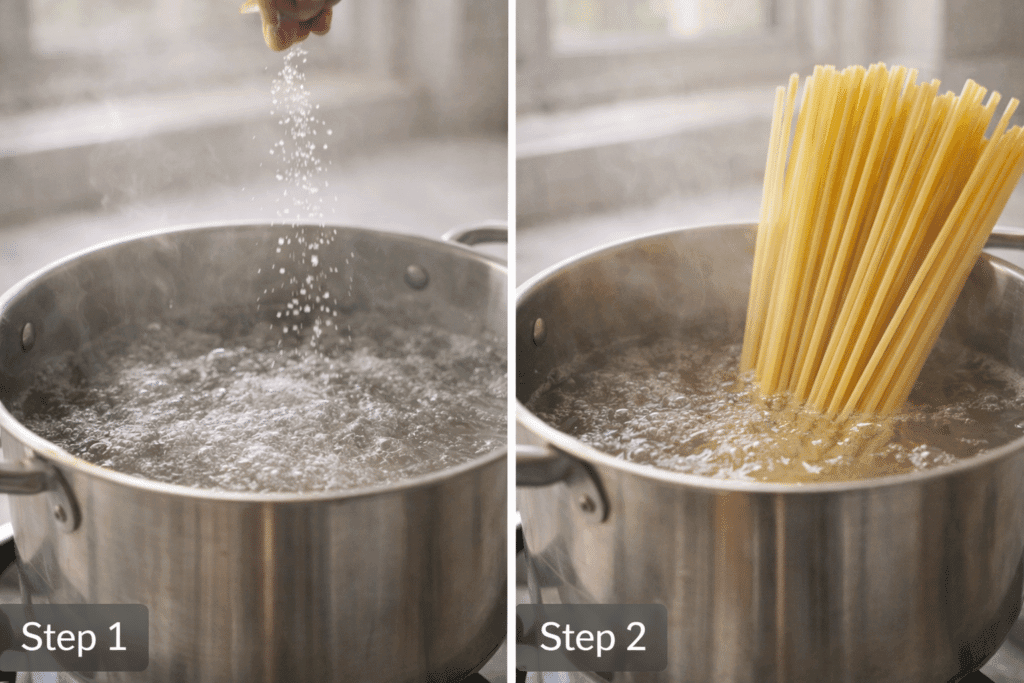
Step 1: Fill a large pot with water and bring it to a rolling boil. Add the salt and stir well. Properly salted water builds flavor from the start and sets up the pasta for a balanced final dish.
Step 2: Add the pasta and cook until almost tender. Taste a strand near the end. It should feel firm in the center, because it will finish cooking later in the sauce. This step helps the pasta absorb more flavor.
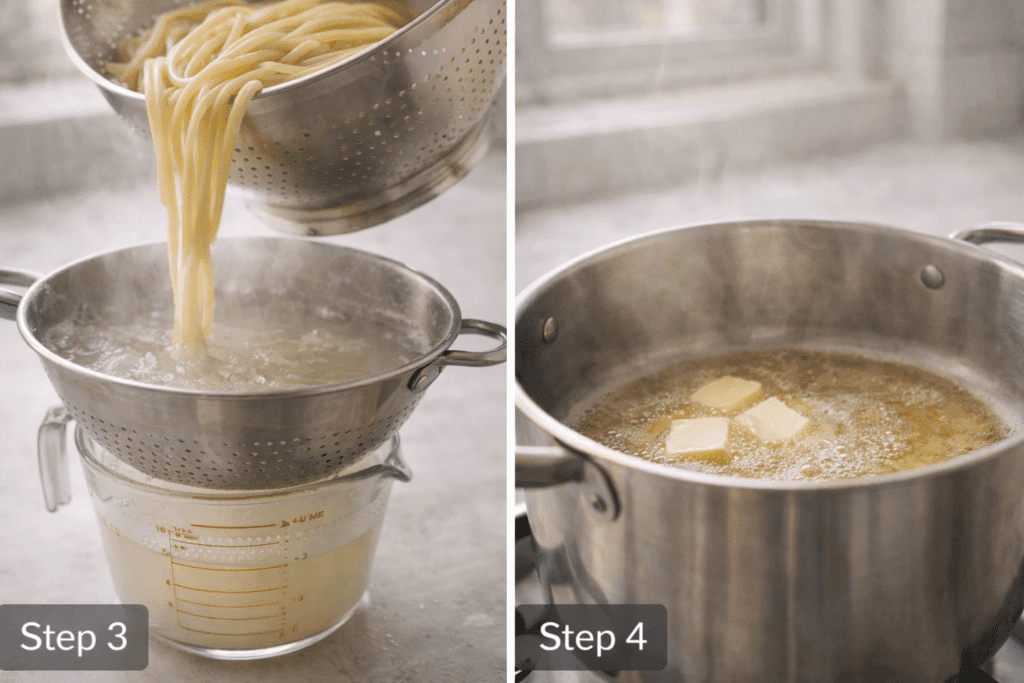
Step 3: Before draining, reserve about two cups of the pasta water. This starchy liquid is essential for creating the sauce. Drain the pasta and set it aside briefly.
Step 4: Return the pot to medium heat and add the butter. Swirl the pot as it melts so it coats the bottom evenly. For deeper flavor, let it cook until lightly browned and nutty.
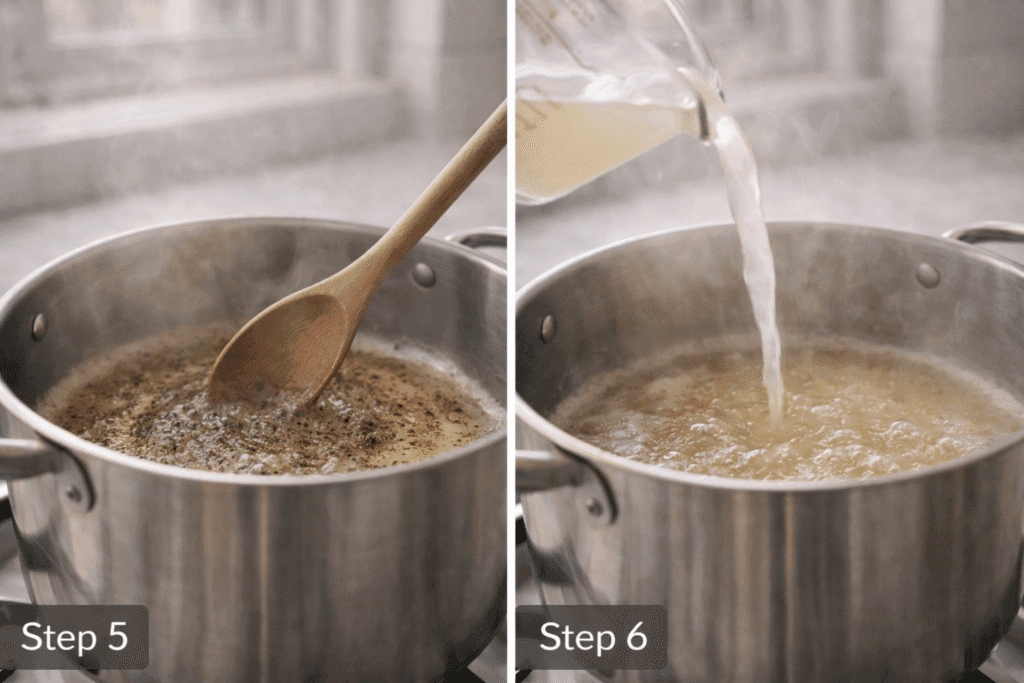
Step 5: Stir in the freshly ground black pepper and cook for about thirty seconds. Keep stirring so the pepper blooms without burning. Lower the heat right after to protect the cheese later.
Step 6: Carefully add about one and a half cups of the reserved pasta water and bring it to a gentle simmer. This creates the base of the sauce and prepares it to bind with the cheese.
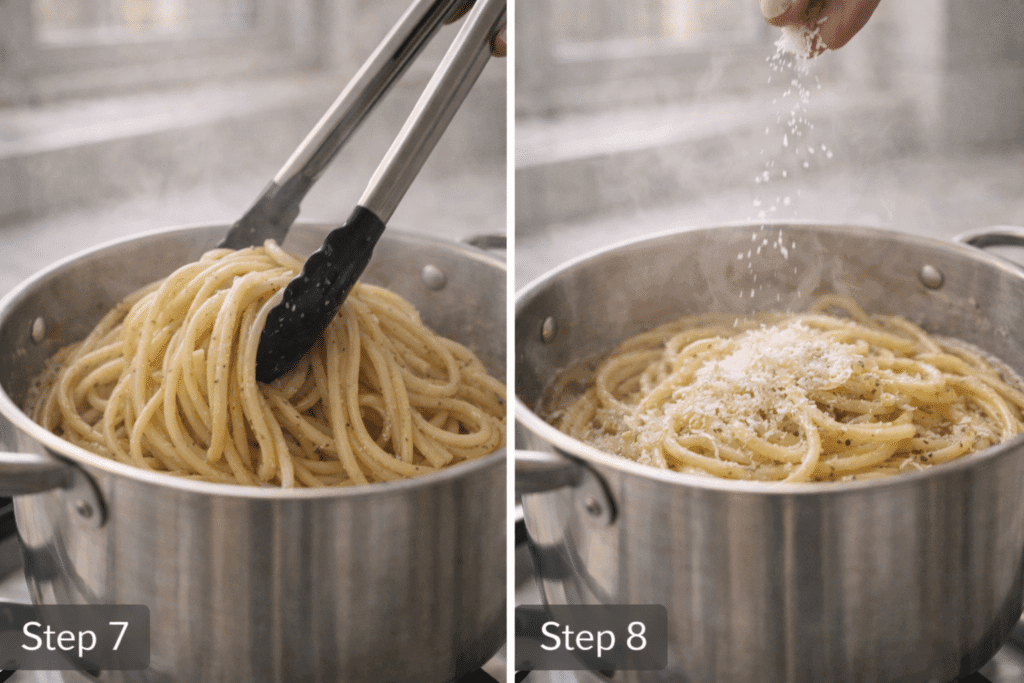
Step 7: Add the drained pasta back to the pot and toss with tongs to coat it in the buttery liquid. Sprinkle in half of the cheese and keep tossing until it melts smoothly.
Step 8: Remove the pot from the heat and add the remaining cheese. Toss continuously. If the pasta looks dry, add more pasta water a little at a time until the sauce turns glossy and coats every strand. Serve immediately for the best texture and flavor.
Serving Suggestions
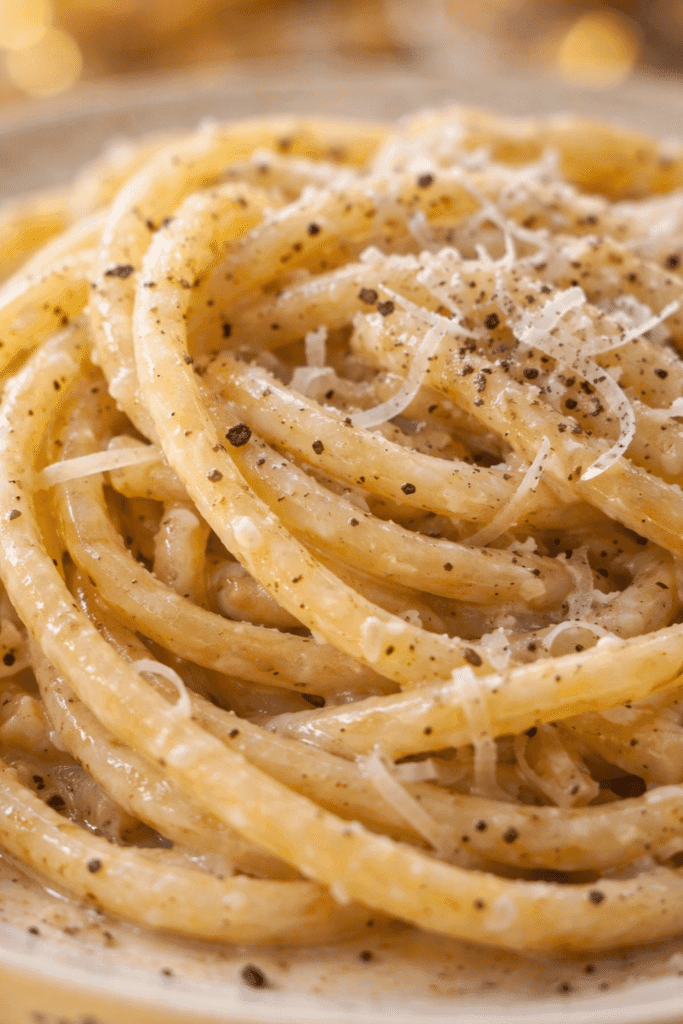
Cacio E Pepe tastes best served immediately, straight from the pot while the sauce stays silky and smooth. I like to plate it in warm bowls and finish with extra freshly grated Pecorino Romano and a few cracks of black pepper on top.
This pasta works beautifully as a main dish with a simple green salad or roasted vegetables on the side. The clean flavors balance well with light, fresh accompaniments.
It also pairs well with grilled chicken or shrimp if you want to add protein without overpowering the dish. These additions keep the focus on the creamy cheese and pepper sauce.
For a cozy dinner, serve it alongside crusty bread to catch every bit of the creamy sauce. Cacio E Pepe fits casual weeknights, relaxed family dinners, or even a simple date-night meal at home when you want something classic and comforting without extra effort.
For a fuller Italian-style dinner, this pasta pairs beautifully with seafood dishes like my bright shrimp linguine recipe.
If you’re planning a cozy family meal, serving it alongside something hearty like chicken lasagna creates a satisfying, well-rounded table.
Storage & Make-Ahead Tips
Cacio E Pepe is best enjoyed fresh, but a few storage tips can still help if you have leftovers. If you need to store it, let the pasta cool slightly, then place it in an airtight container. Keep it in the refrigerator for up to two days. The sauce will thicken as it sits, which is normal for cheese-based pasta.
When reheating, avoid high heat. Warm it gently on the stove over low heat and add a splash of water to loosen the sauce. Stir constantly so the cheese softens without separating. The microwave can work in short bursts, but stirring between intervals matters.
Cacio E Pepe doesn’t work well as a make-ahead dish because the sauce forms best right after cooking. For best results, prep ingredients ahead of time, then cook and serve immediately for that classic creamy texture.
Sienna’s Touch
Cacio E Pepe always reminds me that simple food can feel deeply special. In our Los Angeles kitchen, this pasta brings everyone to the table fast, forks ready and smiles wide. I hope this recipe gives you the same cozy confidence it gives my family. Make it your own, share it proudly, and enjoy every peppery bite.
Frequently Asked Questions
What does Cacio E Pepe mean?
Cacio E Pepe means “cheese and pepper” in Italian. The name reflects how simple the dish is, using just cheese, black pepper, pasta, and water to create a creamy, comforting sauce.
Why doesn’t Cacio E Pepe use cream?
Traditional Cacio E Pepe relies on starchy pasta water and finely grated Pecorino Romano to form the sauce. When tossed correctly, these ingredients create a smooth, creamy texture without any cream.
What is the best cheese for Cacio E Pepe?
Pecorino Romano is the classic choice because of its sharp, salty flavor. Using freshly grated cheese matters, since it melts evenly and blends smoothly into the sauce.
Can I use a different pasta shape?
Yes, but long pasta works best. Spaghetti and bucatini hold the sauce well and allow the cheese and pepper to coat each strand evenly, which gives Cacio E Pepe its signature texture and flavor.
Easy Cacio E Pepe Recipe
This classic Cacio E Pepe recipe uses simple ingredients and precise timing to create a creamy, peppery pasta without cream. Perfect for quick dinners.
- Prep Time: PT5M
- Cook Time: PT15M
- Total Time: PT20M
- Yield: 4 servings 1x
- Category: Dinner
- Method: Stovetop
- Cuisine: Italian
- Diet: Vegetarian
Ingredients
5 teaspoons salt
12 ounces bucatini or spaghetti pasta
6 tablespoons butter
1 tablespoon freshly ground black pepper
1 cup freshly grated Pecorino Romano cheese
Instructions
Step 1: Bring a large pot of water to a boil and salt generously.
Step 2: Cook pasta until just shy of al dente.
Step 3: Reserve pasta water and drain pasta.
Step 4: Melt butter in the pot and bloom black pepper.
Step 5: Add pasta water and bring to a gentle simmer.
Step 6: Add pasta and toss to coat.
Step 7: Add half the cheese and toss until creamy.
Step 8: Remove from heat, add remaining cheese, adjust with pasta water, and serve.
Notes
Use freshly grated Pecorino Romano only.
Lower heat before adding cheese to avoid clumping.
Serve immediately for best texture.
Nutrition
- Serving Size: 1 bowl
- Calories: 520
- Sugar: 2g
- Sodium: 680mg
- Fat: 22g
- Saturated Fat: 13g
- Unsaturated Fat: 7g
- Trans Fat: 0g
- Carbohydrates: 62g
- Fiber: 3g
- Protein: 18g
- Cholesterol: 55mg
Keywords: Cacio E Pepe, Italian pasta, easy pasta recipe